



Every night for eight straight weeks, George Russell has been changing his sleep pattern.
It’s never been by much. An hour here. Another there. But when accounting for the constant criss-crossing of continents and time zones during Formula One’s intense start to the 2025 season, squeezing five races plus preseason testing into just a couple of months, there’s a lot to keep up with.
Advertisement
“(In) Melbourne, I was going to bed earlier and earlier,” Russell told The Athletic in an interview. “Then it’s off to China, then Japan, then Bahrain, moving again, and then the night race (in Saudi Arabia). Then back to Europe, on to Miami. That has such a toll on the body. But knowing how to deal with that, I’m doing better.”
By Russell’s admission, this topic has been “heavy.” It may also seem obsessive and clash with F1’s ‘constant party’ image. But it’s an insight into the marginal gains that Russell, now in his seventh F1 season, is chasing. Getting more rest and focusing on maintaining energy has already helped improve his reaction times when the lights go out at the start of a race. Now, Russell claims, they’re better than ever.
“It’s just these little details that you don’t see on the face of it,” Russell said. “But it just all adds up to creating a better end result.”
It’s a pivotal season for Russell. Not only has he stepped up as Mercedes’ team leader following Lewis Hamilton’s exit to Ferrari, marking the start of a new era at the team overall, but he is also chasing a new contract.
Mentally stronger than ever, he’s hitting his stride at just the right time.
“Everybody is in Lewis’s shadow.”
Speaking to his wife, Susie, in the latest season of “Drive to Survive,” Mercedes team principal Toto Wolff summed up the challenge facing anybody racing next to Hamilton, the seven-time world champion and F1’s statistical all-time great — his on-track success and sport-transcending global stardom demand it.
Over three seasons, paired with the ultimate F1 benchmark, Russell proved why Mercedes had supported his career through its academy since he was a junior racing driver in Formula Three. He became only the third driver to beat Hamilton head-to-head in a season in 2022 —Russell’s first season at the Mercedes works team —and then became the first to do it twice when he won out again last season. In 2024, Russell outqualified Hamilton, a driver with more poles than anyone in F1 history, 19 times in 24 races.
Advertisement
“Being teammates with a seven-time world champion for three years is not straightforward,” Russell said. “There was once a time that if you finished ahead of Lewis Hamilton in a championship or in a race, you’d win the race. Or, if you’d finish ahead of the championship, you’d win the championship. If my time was five years prior, you could argue I’d have two championships in my name.”
Instead, Russell’s arrival coincided with Mercedes’ competitive regression, losing a step on Red Bull, Ferrari and McLaren over the opening years of the current era of car design regulations. But last year, Russell’s performances were one of the big bright points for the team, highlighted by his domination in Las Vegas to lead a 1-2 finish.
Entering the post-Lewis era at Mercedes, where an 18-year-old rookie teammate would partner him, Russell felt no great requirement to do things significantly differently.
“I’m just going about my business, as I have been the last couple of years,” Russell said. “I’m working with the same group of engineers, the same group of mechanics. Obviously, Lewis was such a large presence that you know that he’s not around. But on the day-to-day running of things, it is no different.
“I’m sat at my desk in front of my computer. I do my warm-up in my room, I jump in my race car, I put my helmet on. I want to control my own destiny first and foremost.”
Russell’s strong end to 2024 carried through to the start of the new season when, for the first time since joining Mercedes, he wasn’t dealing with an unstable, unpredictable car, as the team has focused on providing a machine that provides consistent handling rather than chasing pace peaks it can only hit sporadically. This has allowed Russell to put in some impressive performances.
Amid a McLaren supremacy in 2025 that only Max Verstappen has been able to puncture by winning a race ahead of Lando Norris and Oscar Piastri, Russell has still been a regular interloper at the front of the grid, scoring three podiums in the opening five races. His run to third in China earned heady praise from Wolff, who said, “If you want me to name the three (drivers) that I consider to be the top, he’s absolutely among those three, if not top two. And maybe on his way to the top one.”
Russell saw off McLaren’s Lando Norris to second place in Bahrain even as his car malfunctioned (Clive Mason / Getty Images)
Speaking prior to a tough race in Saudi Arabia, where he struggled to fifth due to degrading tires, Russell agreed it had been a strong start to the year, the only other setback being a mix-up over how to best prepare his tires for best grip in Q3 in Japan that left him disappointed with another P5 result in the static race Verstappen won. “From four out of five races, including the sprint, I don’t think we could have achieved a better result,” Russell said. “I’ve been very pleased with that.”
Advertisement
Even if Hamilton’s departure hasn’t prompted a conscious change from Russell, Wolff has seen everything he wanted from the natural ‘heir’ to the team leadership role at Mercedes.
“What is so interesting is that Lewis was always the very experienced driver here and the senior driver,” Wolff told The Athletic. “And George, it was never like he was the puppy. But suddenly, Lewis has gone and George is in his prime, or at the beginning of his prime, clearly the senior driver in the team – that delivers, that performs, that says the right things. And (he) has taken over that role from Lewis.”
Sleep is not the only area outside of the car that Russell has put extra focus on to find a small additional gain so far in 2025.
Every little element of his pre-race routine and preparations with his trainer, Aleix Casanovas, is getting more refined. They’ve placed added emphasis on nutrition, again designed to help his energy levels ensure he’s in the best place possible for when the lights go out.
“When you travel around the world, it’s not smooth on the body, it’s not clean on the stomach,” Russell said. “You take a flight, it doesn’t matter if you’re flying first class or whatever, it’s still food from an airplane that is not your home food. We’re working on all these small details that just add up to making sure I’m in a better place.”
But one big extra step for Russell this year has come mentally, thanks to his work with a psychologist. Although he’s been doing it for the past five years, Russell said they are now doing more work than ever together. “I personally think in five years’ time, this will be the norm – the same way as every driver’s got their own fitness coach,” Russell said.
This work has taught Russell that there isn’t any need to overdo it. “Everyone thinks more is better — ‘I’m going to put more hours in, I’m going to do more with my team, I’m going to do more hours in the gym, I’m going to do more, more, more,’” he said. “But there comes a point where it’s just inefficient and counterproductive. It’s finding that balance.”
Advertisement
One thing Russell has started doing for himself to help with this is taking 15 minutes at the end of each day of an F1 race weekend to complete a lap of the circuit on his electric scooter as a way to reset, clear his head and gather his thoughts. “It might not work for everyone, but it works for me,” he said.
Russell started working with the psychologist amid the increased discourse surrounding mental health, particularly in sport. “I wasn’t in a bad place,” he said. “I just thought, ‘People are talking about it, there’s a bit of awareness around mental health, I want to give it a go, see how I feel.’ And it gave me a lot more than I initially thought. Not only did it make me feel better, it started aiding my performances.”
Russell found he was better able to make sense of how he was feeling during high-pressure F1 events and, importantly, deal with defeat and its associated emotions. He cited Roger Federer’s Dartmouth commencement address, where the tennis legend explained how he only won 54 percent of points in matches he won, as an example of how to handle failure and stop disappointment from snowballing.
“If you actually break it down and understand that it’s just sport, that will help you be at a higher level. Just accepting the fact that nobody wins 100 percent of the time in anything,” Russell said. “So, you’ve got to prepare yourself for those failures, but know how you’re going to deal with them.”
Federer is one of a handful of tennis stars who have inspired Russell. In recent years, he has gotten to know Novak Djokovic and Jannik Sinner, crossing paths with them at home in Monaco. “You see it with the mentality and the drive and the dedication,” Russell said, calling Djokovic “super-inspiring” thanks to his longevity at the very top of tennis.
“The biggest advice he gave me is that he’s been putting in all the work when he was through his twenties, which is what’s allowing him to continue today,” Russell said. “When he was in his twenties, things were quite straightforward and recovery was good, and he felt that he was doing above and beyond. But he said it’s paying dividends for him 10 years down the line.
“That’s really sunk in with me because I want to be here 10 to 15 [more] years at least. Today, if I skip a day of training, it wouldn’t affect me. If I got a bit worse night’s sleep, it wouldn’t really affect me. But maybe it will affect me in 10 years’ time.”
That long-term vision indicates how mindful Russell is about his F1 future. The coming months will be important for what the subsequent years look like.
Russell signed his most recent Mercedes contract in 2023, agreeing on a two-year extension that expires at the end of this season. Early this year, Wolff and Russell discussed a timeline to pick up talks, deciding that the summer would be a natural, normal time for discussions.
Advertisement
“When Lewis was here, they never discussed the contract prior to June (or) July. It was always the summer,” Russell said. “The abnormal part is probably how many drivers have signed so early (on long-term deals).” Russell is currently in the minority as a driver without a firm F1 contract for next year.
Wolff has always been clear that he sees Mercedes’ F1 future as being led by Russell and Kimi Antonelli, the 18-year-old now just starting his F1 journey while still finishing school. That was always the intended succession plan whenever Hamilton stopped racing for the team.
The curveball in all this is Verstappen, whose Red Bull future has become a significant talking point once again amid the team’s difficulties with a peaky car that will surely test his championship defense. Wolff spoke with Verstappen’s camp last summer prior to naming Antonelli as Hamilton’s replacement, but both parties decided not to seriously pursue talks of what would be a massive career change for the Dutchman. But, so long as Russell remains without a contract and uncertainty lingers over Verstappen, the potential Mercedes links will persist.
Wolff was clear there had been no conversations with Verstappen about a possible move for 2026 so far this season. “At the moment, where it is with George and Kimi, there’s no doubt to question that set up for the future,” Wolff said, anticipating talks with Russell would pick up once F1 started its European season in May.
“There’s no stress,” Wolff said. “He’s performing to the highest levels, as we have hoped and expected. He’s delivering – there’s no doubt about that. There’s not more you could demand from that.”

Fifth place in the recent Saudi Arabian race equalled Russell’s worst result so far in 2024 (Kym Illman / Getty Images)
Russell also remains relaxed about his future beyond 2025, believing there is “so much hype” about contracts in F1. “I feel a lot of drivers who are so fixated on trying to secure their futures are maybe ones who don’t have as much self-belief in themselves and feel the need to have that security,” Russell said. “The fact is, if you have a contract and you don’t perform, the team finds a way of getting rid of you. Performance is our only currency. And if you perform, the rest sorts itself out.”
Russell said he would not be surprised to see some “shuffling around” on the grid for next year, believing Mercedes is one of the few teams that can be truly satisfied with the results its 2024 drivers have secured at the start of the new season. “When people aren’t satisfied, people want change,” Russell said. “So, let’s see next year. I think it’ll be an interesting summer.”
Advertisement
But for Russell, it is quite straightforward: so long as he keeps performing, that will be rewarded. He cites NFL legend Tom Brady’s mindset as an example he looks to follow.
“I remember him saying something like, ‘So many young athletes and sports people are so fixated on the money and whatnot, but if you focus on the performance, the money will come,’” Russell said.
“This industry is pretty straightforward. Perform, everything comes. If you don’t perform, it doesn’t matter how good-looking or funny or whatever you are, then it disappears. So, just focus on the number one goal.”
Underpinning all of Russell’s efforts is a firm belief that, given the opportunity, he can become an F1 world champion. Year on year, he’s become stronger and stronger. The pieces are falling into place.
“I absolutely feel ready, to be honest,” Russell said. “Whenever we’ve had half a chance of victory or pole, we’ve been the one to take it. I feel I’m getting stronger and stronger every single season. I feel ready, I feel confident, I have self-belief. I feel I’m performing as good as any single driver on the grid.
“I’m never going to say I am performing the best — because even if I were, I choose not to have that mentality because I always think if you believe that you are at the top of your game that is the beginning of the downfall.
“You always have to believe that there’s more to give.”
(Top image: Jakub Porzycki/NurPhoto via Getty Images)
This news was originally published on this post .

About the author

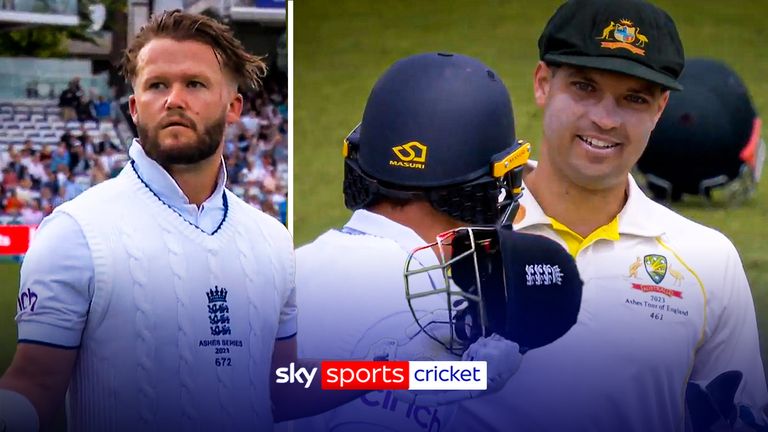
Root says England inspired by 2023 Ashes comeback as he explains Noosa trip
Joe Root told Sky Sports that England are taking inspiration from their Ashes fightback two years ago as they aim to stay in this winter's series as he explained why the Covid series in 2021/22 showed how important breaks from the game are for a team. Spreaker This content is provided by Spreaker, which may be using cookies and other technologies. To show you this content, we need your permission to use cookies. You can use the buttons below to amend your preferences to enable Spreaker cookies or to allow those cookies just once. You can change your settings at any time via the Privacy Options. Unfortunately we have been unable to verify if you have consented to Spreaker cookies. To view this content you can use the button below to allow Spreaker cookies for this session only. Enable Cookies […]
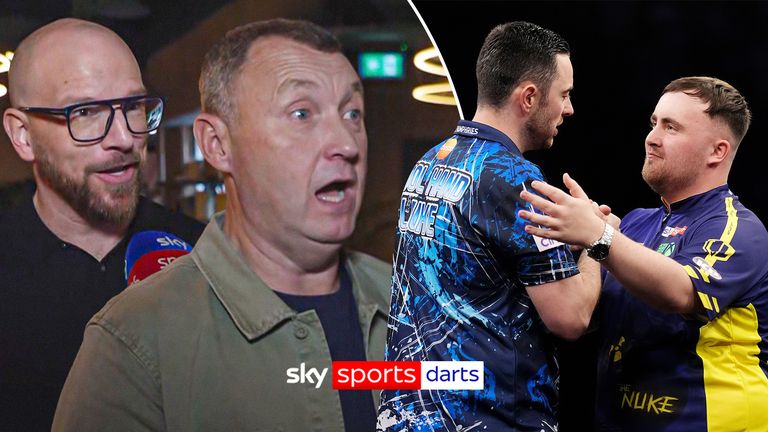
‘Champagne Charlie’ buzzing for Ally Pally debut after smashing Littler record
'Champagne Charlie' Manby is ready for an Alexandra Palace reception to remember having already smashed Luke Littler's record on the Development Tour.Manby was the talk of darts when the Yorkshire slinger threw just 47 darts, racking up a staggering 130.70 average on the Winmau Development Tour in February. It was the best in the tour's history, obliterating reigning world champion and good friend Littler's record of 115.22, but fame quickly left the 20-year-old flummoxed. Who is Charlie Manby? Age: 20Nationality: EnglandHometown: HuddersfieldNickname: ChampagneDarts: 22 Gram TargetTotal Titles: FivePDC World Ranking: 166Highest Average: 130.70 Please use Chrome browser for a more accessible video player Wayne Mardle and Mark Webster give their predictions ahead of the World Darts Championship "I think when you have that sort of stat to your name, you've got a bit of a target on your back and […]
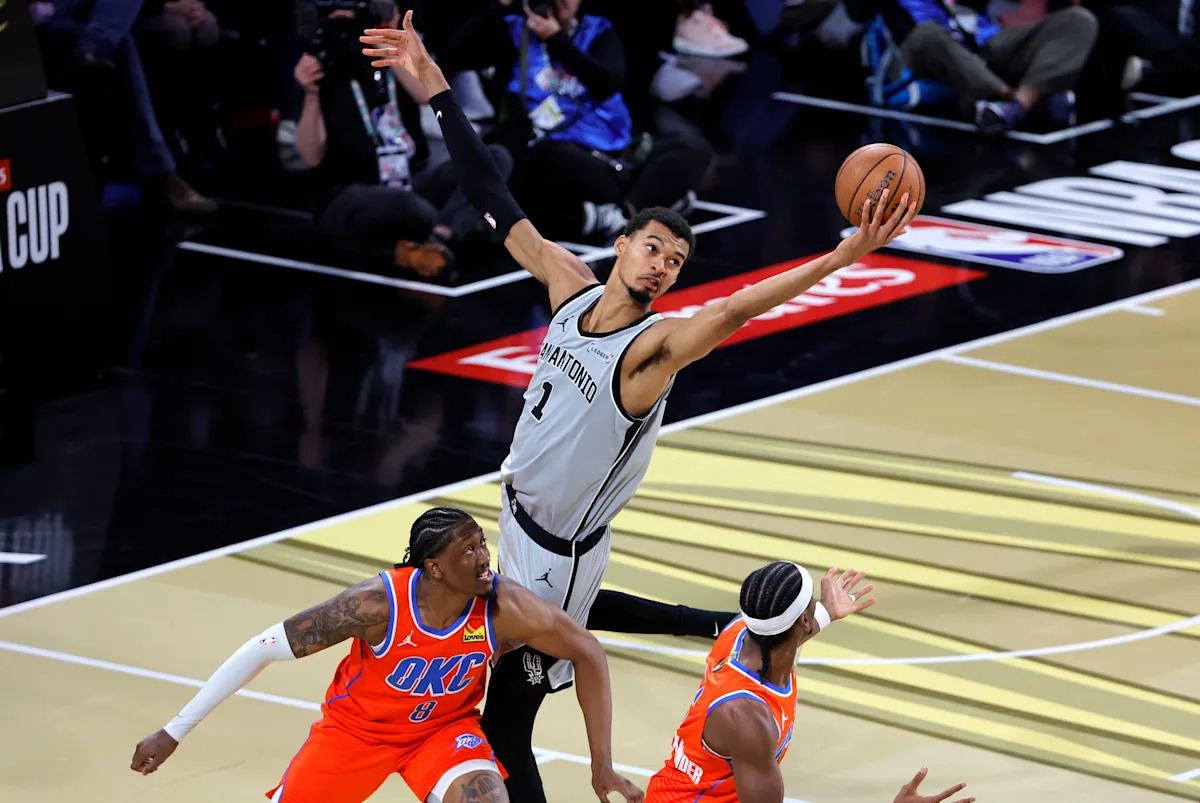
NBA Cup: Is Victor Wembanyama the only hope to curb a Thunder dynasty?
LAS VEGAS — By the time a sweat-drenched Victor Wembanyama took his seat on the Spurs bench, having played the first three and a half minutes of action in a month, a meeting with the champions that previously seemed out of reach suddenly wasn’t.If the first quarter of Saturday night’s semifinal was a reminder of the reign of terror the 24-1 Oklahoma City Thunder have enjoyed for months, the second was a reminder of the French force that refuses to bend the knee.AdvertisementAdvertisementAdvertisementHis introduction to the game — coming off the bench for the first time in his career — changed everything. The friendly skies that Shai Gilgeous-Alexander had coasted in since October were now met with 7 '5 turbulence. Missed Spurs shots became simple second-chance opportunities for the gangly center. Halfcourt sequences that Oklahoma City would typically carry out […]
Sparta se chce přiblížit Slavii, Bohemians chystají oslavy výročí
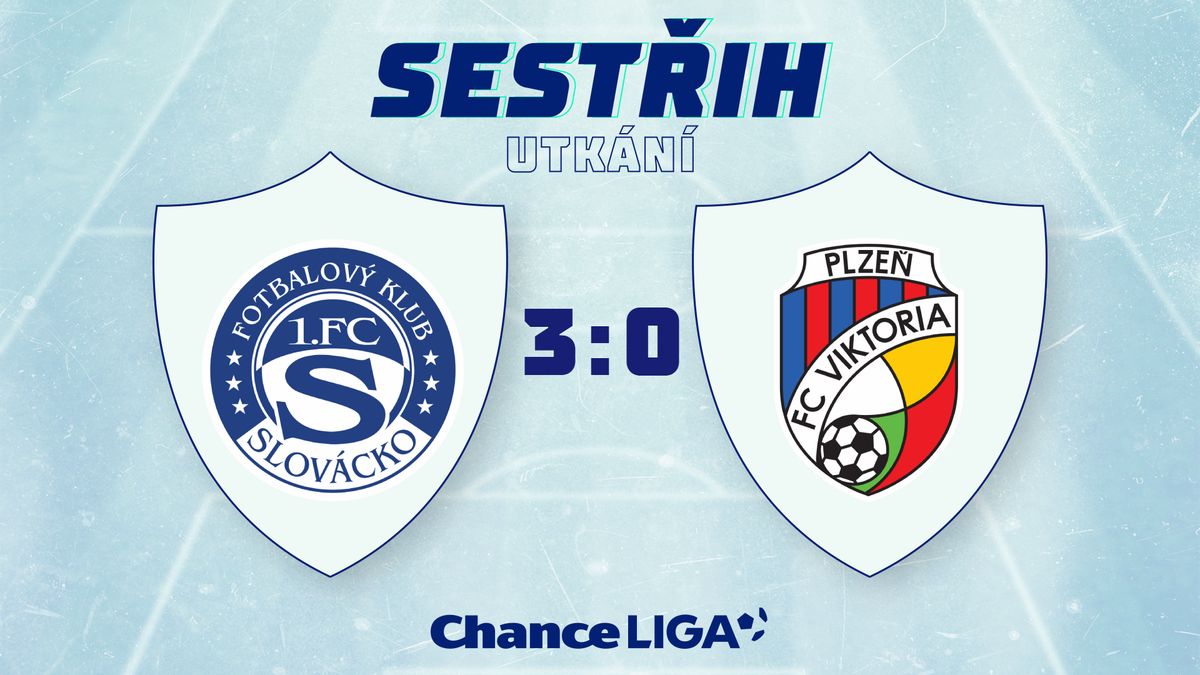
Dvanáctí Bohemians prohráli poslední tři ligové zápasy a propadají se tabulkou, navíc jsou doma po Baníku druhým nejhorším celkem soutěže. Ale slaví 120 let od založení klubu a v utkání se šestou Karvinou budou chtít fanoušky potěšit nejen výročními dresy a doprovodným programem, ale i třemi body. Jenže to nebudou mít lehké. Karviná za posledních sedm kole prohrála jen jednou, byť šlo o kolaps (0:6) v deseti proti Liberci. A bodově je na tom stejně, jako třeba o dost ambicióznější mančaft z Plzně.Právě pátá Plzeň hostí čtrnáctou Duklu. Viktoria z posledních sedmi soutěžních duelů vyhrála jen jediný s Mladou Boleslaví, je ale třeba zmínit, že tři bezbrankové remízy v Evropské lize (Fenerbahce, Freiburg, Panathinaikos) rozhodně nelze označit za průšvih, Plzeň naopak přiblížily postupu do jarní fáze. Viktoriáni právě v Aténách ubránili remízový výsledek i přes brzké vyloučení Václava Jemelky. Dukla z posledních pěti duelů posbírala tři body za stejný počet remíz a pokud prohraje o více než tři […]
College basketball winners and losers: Melvin Council rescues Kansas, Kentucky turns it on late vs. Indiana
During the final minutes of regulation of Kansas' game vs. NC State on Saturday, Jayhawks star Darryn Peterson -- the projected No. 1 overall pick in the 2026 NBA Draft -- checked out of the game twice. Peterson, who returned last weekend against Missouri after missing his team's previous seven games due to a hamstring injury, appeared to reaggravate the injury. "I think he was getting tight," Kansas coach Bill Self said postgame. "I haven't talked to the doctor yet or the trainer, but he said he needed to come out." Even without Peterson down the stretch, Kansas walked away with a dramatic 77-76 overtime upset win over NC State on Saturday, in one of the best games of the 2025-26 season thus far. The hero for Kansas was Melvin Council Jr., who scored a career-high 36 points and knocked down nine 3-pointers. […]

Fantasy Baseball Offseason Tracker: Jorge Polanco is Mets’ Pete Alonso replacement; Kenley Jansen to Tigers
The hot stove is at full blast, with the trade market showing ample activity and a number of noteworthy free agents having already come off the board. Where can you turn for guidance amid this dizzying whirlwind? Right here is where. Chris Towers and I will be making the Offseason Tracker our home base for the next few months, churning out content as the news warrants. Here, you'll get a breakdown of all the moves that matter for Fantasy Baseball without all the fluff. (OK, maybe a little fluff.) Bookmark it. Read it. Live by it.Isaac Collins traded to RoyalsFor a minute there, Collins was the hot thing in Fantasy, slashing .338/.425/.544 over a two-month stretch from June 12 through Aug. 11. And while he slashed only .182/.303/.293 thereafter, slipping into more of a part-time role, he still ended up reaching […]
Related
Root says England inspired by 2023 Ashes comeback as he explains Noosa trip
Joe Root told Sky Sports that England are taking inspiration from their Ashes fightback two years ago as they aim to stay in this winter's series as he explained why the Covid series in 2021/22 showed how important breaks from the game are for a team. Spreaker This content is provided by Spreaker, which may be using cookies and other technologies. To show you this content, we need your permission to use cookies. You can use the buttons below to amend your preferences to enable Spreaker cookies or to allow those cookies just once. You can change your settings at any time via the Privacy Options. Unfortunately we have been unable to verify if you have consented to Spreaker cookies. To view this content you can use the button below to allow Spreaker cookies for this session only. Enable Cookies […]
‘Champagne Charlie’ buzzing for Ally Pally debut after smashing Littler record
'Champagne Charlie' Manby is ready for an Alexandra Palace reception to remember having already smashed Luke Littler's record on the Development Tour.Manby was the talk of darts when the Yorkshire slinger threw just 47 darts, racking up a staggering 130.70 average on the Winmau Development Tour in February. It was the best in the tour's history, obliterating reigning world champion and good friend Littler's record of 115.22, but fame quickly left the 20-year-old flummoxed. Who is Charlie Manby? Age: 20Nationality: EnglandHometown: HuddersfieldNickname: ChampagneDarts: 22 Gram TargetTotal Titles: FivePDC World Ranking: 166Highest Average: 130.70 Please use Chrome browser for a more accessible video player Wayne Mardle and Mark Webster give their predictions ahead of the World Darts Championship "I think when you have that sort of stat to your name, you've got a bit of a target on your back and […]
NBA Cup: Is Victor Wembanyama the only hope to curb a Thunder dynasty?
LAS VEGAS — By the time a sweat-drenched Victor Wembanyama took his seat on the Spurs bench, having played the first three and a half minutes of action in a month, a meeting with the champions that previously seemed out of reach suddenly wasn’t.If the first quarter of Saturday night’s semifinal was a reminder of the reign of terror the 24-1 Oklahoma City Thunder have enjoyed for months, the second was a reminder of the French force that refuses to bend the knee.AdvertisementAdvertisementAdvertisementHis introduction to the game — coming off the bench for the first time in his career — changed everything. The friendly skies that Shai Gilgeous-Alexander had coasted in since October were now met with 7 '5 turbulence. Missed Spurs shots became simple second-chance opportunities for the gangly center. Halfcourt sequences that Oklahoma City would typically carry out […]
Sparta se chce přiblížit Slavii, Bohemians chystají oslavy výročí
Dvanáctí Bohemians prohráli poslední tři ligové zápasy a propadají se tabulkou, navíc jsou doma po Baníku druhým nejhorším celkem soutěže. Ale slaví 120 let od založení klubu a v utkání se šestou Karvinou budou chtít fanoušky potěšit nejen výročními dresy a doprovodným programem, ale i třemi body. Jenže to nebudou mít lehké. Karviná za posledních sedm kole prohrála jen jednou, byť šlo o kolaps (0:6) v deseti proti Liberci. A bodově je na tom stejně, jako třeba o dost ambicióznější mančaft z Plzně.Právě pátá Plzeň hostí čtrnáctou Duklu. Viktoria z posledních sedmi soutěžních duelů vyhrála jen jediný s Mladou Boleslaví, je ale třeba zmínit, že tři bezbrankové remízy v Evropské lize (Fenerbahce, Freiburg, Panathinaikos) rozhodně nelze označit za průšvih, Plzeň naopak přiblížily postupu do jarní fáze. Viktoriáni právě v Aténách ubránili remízový výsledek i přes brzké vyloučení Václava Jemelky. Dukla z posledních pěti duelů posbírala tři body za stejný počet remíz a pokud prohraje o více než tři […]
College basketball winners and losers: Melvin Council rescues Kansas, Kentucky turns it on late vs. Indiana
During the final minutes of regulation of Kansas' game vs. NC State on Saturday, Jayhawks star Darryn Peterson -- the projected No. 1 overall pick in the 2026 NBA Draft -- checked out of the game twice. Peterson, who returned last weekend against Missouri after missing his team's previous seven games due to a hamstring injury, appeared to reaggravate the injury. "I think he was getting tight," Kansas coach Bill Self said postgame. "I haven't talked to the doctor yet or the trainer, but he said he needed to come out." Even without Peterson down the stretch, Kansas walked away with a dramatic 77-76 overtime upset win over NC State on Saturday, in one of the best games of the 2025-26 season thus far. The hero for Kansas was Melvin Council Jr., who scored a career-high 36 points and knocked down nine 3-pointers. […]
Fantasy Baseball Offseason Tracker: Jorge Polanco is Mets’ Pete Alonso replacement; Kenley Jansen to Tigers
The hot stove is at full blast, with the trade market showing ample activity and a number of noteworthy free agents having already come off the board. Where can you turn for guidance amid this dizzying whirlwind? Right here is where. Chris Towers and I will be making the Offseason Tracker our home base for the next few months, churning out content as the news warrants. Here, you'll get a breakdown of all the moves that matter for Fantasy Baseball without all the fluff. (OK, maybe a little fluff.) Bookmark it. Read it. Live by it.Isaac Collins traded to RoyalsFor a minute there, Collins was the hot thing in Fantasy, slashing .338/.425/.544 over a two-month stretch from June 12 through Aug. 11. And while he slashed only .182/.303/.293 thereafter, slipping into more of a part-time role, he still ended up reaching […]
Be the first to leave a comment