



Aaron Glenn’s goal at the outset of the offseason was to establish a brand, to set the tone. What’s that brand?
“Tough, physical, violent, aggressive, resilient,” Glenn said. “If we continue to get guys like that, you’ll start to see the brand show up on the grass.”
That thought process drove everything Glenn and general manager Darren Mougey did this offseason, in free agency and especially in the NFL Draft. They didn’t set out to make a splash — and they didn’t in free agency, outside of signing quarterback Justin Fields — but wanted to simply find the right people to fit what they want to do. For the last couple of years, the Jets had talent and big names. They made headlines, but it was a team that often faltered under pressure, struggling to handle adversity and sometimes failing to cultivate a culture of accountability.
Advertisement
Glenn is trying to change that. Toughness was a word used frequently this weekend. The Jets’ first-round pick was offensive tackle Armand Membou, a mauler with a highlight reel full of plays on which he drove defensive ends down the field and into the ground. Tight end Mason Taylor comes from a family featuring two of the toughest defensive players to come through the NFL in the last couple of decades in his father (Jason Taylor) and his uncle (Zach Thomas). Third-round pick Azareye’h Thomas is a cornerback lauded for his toughness at the line of scrimmage. Fourth-round safety Malachi Moore is a feisty, tough, emotional leader — and someone expected to make an impact immediately.
“The No. 1 thing is we got guys that fit the brand of who we’re going to be,” Glenn said. “That was something we talked about starting in free agency. We’re very intentional about guys that want to be part of this organization, and I would say the same thing when it comes to coaches also: Everyone fits. We want to continue that trend.”
Here are some thoughts about the Jets’ draft weekend, the moves Glenn and Mougey made, and what it all means going forward.
Best value pick
Most evaluators had Florida State CB Azareye’h Thomas graded as a second-round prospect — he was ranked the sixth-best cornerback and 51st overall in The Beast, and the Jets were able to land him in the third round, 73rd overall. Cornerback was not the Jets’ biggest need by a longshot, but they have one of the NFL’s better groups of defensive back coaches (in Glenn, defensive backs coach Chris Harris and assistant defensive backs coach Dre’ Bly); they should be able to get the most out of someone like Thomas. The 20-year-old fits the mold of what Glenn wants out of his cornerbacks in terms of size (6-2, 196) and physicality at the line of scrimmage, an area where Thomas thrives.
Advertisement
Most surprising pick
There are two answers for this one: a pick the Jets made, and one they didn’t. Let’s start with the one they did: That would be Thomas, not because of a lack of talent, but just considering other needs the Jets had and some prospects on the board at those spots. The Jets have Sauce Gardner and are expected to extend him, and they paid good money for Brandon Stephens in free agency. Michael Carter II returns at nickel.
The Jets badly needed to add some talent to the wide receiver room and Iowa State’s Jaylin Noel — a projected second-round pick by many — was still on the board when the Jets picked, as was Notre Dame safety Xavier Watts and Kentucky defensive tackle Deone Walker. The Jets clearly view Thomas as a long-term starter at corner, with skills worth developing.
As for the other surprise pick: It was that the Jets did not draft any defensive tackles, especially in a class considered deep at the position. Quinnen Williams returns and the options next to him — Derrick Nnadi, Byron Cowart, Jay Tufele, Leonard Taylor — aren’t especially exciting.
“We feel good about that group,” Mougey said. “We went into the draft knowing that the group was deep and it was a good group, but when you get to the end of the process, whether there’s character issues or medical issues that eliminate some guys, the group gets much thinner. There were some guys we identified but we feel good about the group we have in there.”
Biggest question mark
The Jets needed a wide receiver in this draft and they went with Georgia’s Arian Smith. It’s fair to wonder if he was the best option at the position. Smith has clearly defined talents and brings something their wide receiver room doesn’t have currently: Deep speed. (“The elite speed is a hard trait to pass on,” Mougey said.) He’s a track star — literally, in both high school and college — and averaged 17 yards per catch while also standing out as a gunner on special teams. But he has one significant knock against him: hands. Smith had 10 drops last season, the most of any player drafted this weekend.
Advertisement
“That’s definitely something I need to improve on,” Smith said. “Drops are going to happen. I just need to do a better job of eliminating them and I need to be more dominant in one-on-ones and I feel like I am.”
Glenn compared Smith coming out of college with a drops issue to what he witnessed after the Lions picked receiver Jameson Williams in the first round of the 2022 draft.
“He’s very self-aware. It starts there. He knows he needs to get better at that,” Glenn said. “When (Williams) came into the league, everyone talked about his drops and he worked on it tirelessly every day in practice. I see (Smith) doing the same thing. If you’re self aware and you understand that you have an issue … that’s the start.”
Remaining needs
As mentioned, the Jets didn’t address the defensive tackle position but Mougey said the team feels comfortable with the players they signed this offseason and didn’t rule out the possibility that they’d add more to the room at some point. Outside of that, an argument could be made that wide receiver remains a problem area for this team. As of now, it’s not exactly clear who even is the No. 2 wide receiver — or at least, who is someone that the Jets can rely on to make it so defenses can’t just double Wilson without paying for it? Josh Reynolds, Allen Lazard, Tyler Johnson and Malachi Corley don’t strike fear into the heart of opposing defenses. The Jets believe Smith’s deep speed can open things up for Wilson — but Smith will have to overcome the issue mentioned (hands) while also developing as a route runner.
The Jets also could have used some additional depth on the interior of the offensive line but that wasn’t a pressing need since they have center Josh Myers and guard Xavier Newman as backups currently.
Post-draft outlook
The Jets mostly attacked their positions of need. They found a new starting right tackle (Membou) and a new starting tight end (Taylor), both arguably the biggest needs on the roster. They added depth in the secondary, a potential starting safety in Malachi Moore — who it sounds like Glenn will use in a Brian Branch-esque role — and depth at wide receiver and edge rusher. Hype for the Jets won’t change much based on their draft since they mostly went chalk. This is not a team that will enter the 2025 season with significant expectations, though maybe that’s not a bad thing after the disaster of the last couple of years.
The biggest priority for this draft seemed to be surrounding Justin Fields with the sort of players that will make life easier for him as he attempts to take the next step in a new environment — and in building an offense that plans to become a run-first attack after barely running the ball last year. In free agency and the draft, Glenn and Mougey targeted the sort of players that Glenn feels fit his culture and the style of football he wants to play. They got significantly younger across the board.
Advertisement
Interestingly, Glenn seemed to model many of the Jets’ picks after success stories he experienced as the defensive coordinator with the Lions. He compared Membou to Penei Sewell, Taylor has drawn comparisons to Sam LaPorta, Glenn compared Smith to Jameson Williams and he called Brian Branch to ask about Moore, a teammate of Branch’s at Alabama with a similarly versatile skillset.
Clearly, they are building the team in Glenn’s image. Whether that is going to work will be discovered once the season starts.
(Photo: Mark Hoffman / Milwaukee Journal Sentinel / Imagn Images)
This news was originally published on this post .


About the author


NFL Confidential: Scouts, Execs on What’s Wrong with Chiefs and If They Can Fix It
Maybe a decade of success and Super Bowl runs has finally caught up to the Chiefs.Deep playoff runs take time, and they undeniably exact a physical toll, and the Chiefs have been doing it for most of the past decade. That includes runs to the Super Bowl in each of the last three seasons. That’s 17 regular-season games, plus three or four playoff games, and then only a couple of months off before they’re back on the field for spring practices.Could all that wear and tear explain Kansas City's struggles this season?FOX Sports NFL reporters Ralph Vacchiano and Eric D. Williams surveyed the league to gauge whether we're witnessing the end of a dynasty. *** Scouts' View: Maybe the Chiefs just need a long restRalph Vacchiano: "They look tired," an executive from an NFC team told me. "That’s what I think every […]

Šulc rozhodl gólem o výhře Lyonu nad Le Havrem
Online magazín deníku Právo & Seznam.czCopyright © 1996–2025, Seznam.cz, a.s., Borgis, a.s., ČTK, DPA, Reuters, fotobanka Profimedia.Publikování nebo další šíření obsahu serveru Sport.cz je bez písemného souhlasu společnosti Borgis, a.s. zakázáno. RSS kanály serveru Sport.cz jsou určeny pouze pro osobní užití. Jakékoli kopírování, šíření nebo využívání obsahu RSS kanálů serveru Sport.cz bez předchozího písemného souhlasu společnosti Borgis a.s. není dovoleno. Dodavatelem obsahu serveru Sport.cz a osobou vykonávající redakční odpovědnost je společnost BORGIS a.s. Šiřitelem reklamy na serveru Sport.cz je společnost Seznam.cz, a.s., IČO 26168685.

Brankář Jaroš čistým kontem pomohl Ajaxu k výhře nad Feyenoordem
Na lídry z PSV s dalším českým gólmanem Matějem Kovářem ztrácí Ajax aktuálně 14 bodů.O vítězství historicky nejúspěšnějšího celku nizozemské Eredivisie rozhodl v 13. minutě kapitán Klaassen. V 94. minutě ještě zpečetil úspěch v utkání označovaném jako „De Klassieker“ střídající Mokio. Ajax vyhrál třetí ligový zápas za sebou.
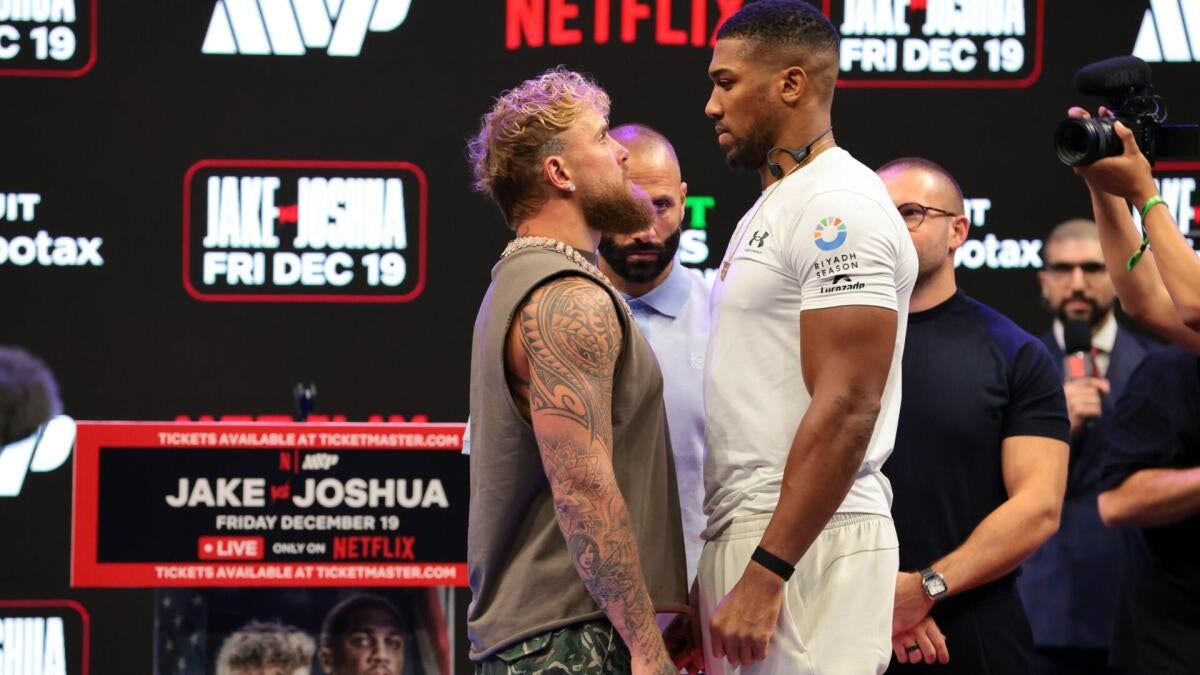
Jake Paul vs. Anthony Joshua prediction, odds, picks: Dec. 19 fight picks from boxing expert
Jake Paul will meet Anthony Joshua in an eight-round sanctioned match with 10 oz. gloves on Friday at the Kaseya Center in Miami. This will be Joshua's first fight since losing by knockout to Daniel Dubois for the IBF heavyweight championship on Sept. 21, 2024. Paul, meanwhile, is coming off a 10-round unanimous decision win over Julio Cesar Chavez Jr. this past June. Paul has registered three knockouts in his past five fights, but this is clearly a massive step up in competition, so what Jake Paul vs. Anthony Joshua props and bets should you target?The latest Jake Paul vs. Anthony Joshua odds from FanDuel list Anthony as the -1300 favorite (risk $1,300 to win $100) to win, with Paul as a +700 underdog (risk $100 to win $700). The over/under for total rounds is 2.5 (-110/-120), and one could […]
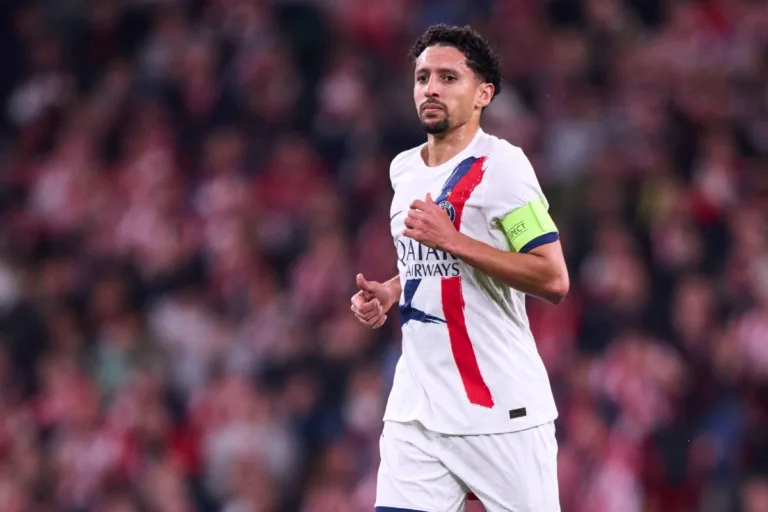
Com Marquinhos e Dembélé, PSG divulga lista de relacionados para a decisão contra o Flamengo
Marquinhos era dúvida mas está confirmado para a Copa Intercontinental (Credit: Cesar Ortiz Gonzalez)O Paris Saint-Germain divulgou, neste domingo, os jogadores que estão relacionados para o confronto contra o Flamengo, pela decisão da Copa Intercontinental, na próxima quarta-feira, no Estádio Ahmad Bin Ali, no Catar. Portanto, o zagueiro brasileiro Marquinhos, que era dúvida, apareceu na lista do técnico espanhol Luis Enrique. Assim, o vencedor da última Bola de Ouro, o francês Dembélé, também vai estar no Catar. PUBLICIDADE PUBLICIDADEPara este importante duelo, apenas o lateral-direito marroquino Achraf Hakimi, que ainda se recupera de uma entorse no tornozelo esquerdo, está fora da decisão do Intercontinental. Os jogadores da equipe francesa embarcaram neste domingo para o Catar. Os jogadores voltaram a Paris depois de encarar, no sábado, o Metz, fora de casa.Vale destacar, então, que o PSG vem de dois jogos longe […]
Com Marquinhos e Dembélé, PSG divulga lista de relacionados para a decisão contra o Flamengo
Marquinhos era dúvida mas está confirmado para a Copa Intercontinental (Credit: Cesar Ortiz Gonzalez)O Paris Saint-Germain divulgou, neste domingo, os jogadores que estão relacionados para o confronto contra o Flamengo, pela decisão da Copa Intercontinental, na próxima quarta-feira, no Estádio Ahmad Bin Ali, no Catar. Portanto, o zagueiro brasileiro Marquinhos, que era dúvida, apareceu na lista do técnico espanhol Luis Enrique. Assim, o vencedor da última Bola de Ouro, o francês Dembélé, também vai estar no Catar. PUBLICIDADE PUBLICIDADEPara este importante duelo, apenas o lateral-direito marroquino Achraf Hakimi, que ainda se recupera de uma entorse no tornozelo esquerdo, está fora da decisão do Intercontinental. Os jogadores da equipe francesa embarcaram neste domingo para o Catar. Os jogadores voltaram a Paris depois de encarar, no sábado, o Metz, fora de casa.Vale destacar, então, que o PSG vem de dois jogos longe […]
Related
NFL Confidential: Scouts, Execs on What’s Wrong with Chiefs and If They Can Fix It
Maybe a decade of success and Super Bowl runs has finally caught up to the Chiefs.Deep playoff runs take time, and they undeniably exact a physical toll, and the Chiefs have been doing it for most of the past decade. That includes runs to the Super Bowl in each of the last three seasons. That’s 17 regular-season games, plus three or four playoff games, and then only a couple of months off before they’re back on the field for spring practices.Could all that wear and tear explain Kansas City's struggles this season?FOX Sports NFL reporters Ralph Vacchiano and Eric D. Williams surveyed the league to gauge whether we're witnessing the end of a dynasty. *** Scouts' View: Maybe the Chiefs just need a long restRalph Vacchiano: "They look tired," an executive from an NFC team told me. "That’s what I think every […]
Šulc rozhodl gólem o výhře Lyonu nad Le Havrem
Online magazín deníku Právo & Seznam.czCopyright © 1996–2025, Seznam.cz, a.s., Borgis, a.s., ČTK, DPA, Reuters, fotobanka Profimedia.Publikování nebo další šíření obsahu serveru Sport.cz je bez písemného souhlasu společnosti Borgis, a.s. zakázáno. RSS kanály serveru Sport.cz jsou určeny pouze pro osobní užití. Jakékoli kopírování, šíření nebo využívání obsahu RSS kanálů serveru Sport.cz bez předchozího písemného souhlasu společnosti Borgis a.s. není dovoleno. Dodavatelem obsahu serveru Sport.cz a osobou vykonávající redakční odpovědnost je společnost BORGIS a.s. Šiřitelem reklamy na serveru Sport.cz je společnost Seznam.cz, a.s., IČO 26168685.
Brankář Jaroš čistým kontem pomohl Ajaxu k výhře nad Feyenoordem
Na lídry z PSV s dalším českým gólmanem Matějem Kovářem ztrácí Ajax aktuálně 14 bodů.O vítězství historicky nejúspěšnějšího celku nizozemské Eredivisie rozhodl v 13. minutě kapitán Klaassen. V 94. minutě ještě zpečetil úspěch v utkání označovaném jako „De Klassieker“ střídající Mokio. Ajax vyhrál třetí ligový zápas za sebou.
Jake Paul vs. Anthony Joshua prediction, odds, picks: Dec. 19 fight picks from boxing expert
Jake Paul will meet Anthony Joshua in an eight-round sanctioned match with 10 oz. gloves on Friday at the Kaseya Center in Miami. This will be Joshua's first fight since losing by knockout to Daniel Dubois for the IBF heavyweight championship on Sept. 21, 2024. Paul, meanwhile, is coming off a 10-round unanimous decision win over Julio Cesar Chavez Jr. this past June. Paul has registered three knockouts in his past five fights, but this is clearly a massive step up in competition, so what Jake Paul vs. Anthony Joshua props and bets should you target?The latest Jake Paul vs. Anthony Joshua odds from FanDuel list Anthony as the -1300 favorite (risk $1,300 to win $100) to win, with Paul as a +700 underdog (risk $100 to win $700). The over/under for total rounds is 2.5 (-110/-120), and one could […]
Com Marquinhos e Dembélé, PSG divulga lista de relacionados para a decisão contra o Flamengo
Marquinhos era dúvida mas está confirmado para a Copa Intercontinental (Credit: Cesar Ortiz Gonzalez)O Paris Saint-Germain divulgou, neste domingo, os jogadores que estão relacionados para o confronto contra o Flamengo, pela decisão da Copa Intercontinental, na próxima quarta-feira, no Estádio Ahmad Bin Ali, no Catar. Portanto, o zagueiro brasileiro Marquinhos, que era dúvida, apareceu na lista do técnico espanhol Luis Enrique. Assim, o vencedor da última Bola de Ouro, o francês Dembélé, também vai estar no Catar. PUBLICIDADE PUBLICIDADEPara este importante duelo, apenas o lateral-direito marroquino Achraf Hakimi, que ainda se recupera de uma entorse no tornozelo esquerdo, está fora da decisão do Intercontinental. Os jogadores da equipe francesa embarcaram neste domingo para o Catar. Os jogadores voltaram a Paris depois de encarar, no sábado, o Metz, fora de casa.Vale destacar, então, que o PSG vem de dois jogos longe […]
Com Marquinhos e Dembélé, PSG divulga lista de relacionados para a decisão contra o Flamengo
Marquinhos era dúvida mas está confirmado para a Copa Intercontinental (Credit: Cesar Ortiz Gonzalez)O Paris Saint-Germain divulgou, neste domingo, os jogadores que estão relacionados para o confronto contra o Flamengo, pela decisão da Copa Intercontinental, na próxima quarta-feira, no Estádio Ahmad Bin Ali, no Catar. Portanto, o zagueiro brasileiro Marquinhos, que era dúvida, apareceu na lista do técnico espanhol Luis Enrique. Assim, o vencedor da última Bola de Ouro, o francês Dembélé, também vai estar no Catar. PUBLICIDADE PUBLICIDADEPara este importante duelo, apenas o lateral-direito marroquino Achraf Hakimi, que ainda se recupera de uma entorse no tornozelo esquerdo, está fora da decisão do Intercontinental. Os jogadores da equipe francesa embarcaram neste domingo para o Catar. Os jogadores voltaram a Paris depois de encarar, no sábado, o Metz, fora de casa.Vale destacar, então, que o PSG vem de dois jogos longe […]
Be the first to leave a comment