



On Thursday night, Minnesota Vikings general manager Kwesi Adofo-Mensah was asked about his thought process with having only four picks in the 2025 NFL Draft. He quipped: “Wait, we only have four?”
The lack of draft capital clouded what was possible for Minnesota from the start. The team traded a handful of picks last year to move up for edge rusher Dallas Turner in the first round. To compensate, the Vikings used free agency last month to address their biggest needs, though they still eyed trench additions and skill complements this weekend. They were able to get both, also using a trade to acquire Sam Howell from the Seahawks to back up J.J. McCarthy at quarterback.
Minnesota will also be active in recruiting undrafted free agents after the draft. Then the team will head into summer workouts with big expectations.
Best value pick
Kobe King was not a name linked to Minnesota before Saturday, and understandably so. The Vikings don’t need off-ball linebackers. Blake Cashman is an exceptional middle linebacker, and Ivan Pace Jr. has been one of the biggest wins of general manager Kwesi Adofo-Mensah’s time in Minnesota.
Had a preferred running back like Texas Tech’s Tahj Brooks slid to the Vikings at No. 201, who knows whether the Vikings would have stuck with King? He’s the pick, though, because of where most had him projected. Dane Brugler, The Athletic’s draft expert, graded him as a fourth-round pick. King was the No. 8 off-ball linebacker on Brugler’s board.
Advertisement
Why would the Vikings go after him? Well, both Cashman and Pace missed time last season. And while the team targeted Eric Wilson for a backup and special teams role, there’s value in adding another former team captain from the Big Ten who can seek and destroy. King may not have ideal length, and coverage ability might not be his calling card. But linebackers are critical to the way defensive coordinator Brian Flores prefers to stop the run, and King can accomplish that task.
Most surprising pick
Let’s focus on what happened at the top.
The Vikings were always in the market for an interior offensive lineman in the first round. In that sense, using the 24th pick on Ohio State’s Donovan Jackson was unsurprising. The surprise was that they took Jackson at that spot.
Few draft analysts projected him to be picked in the first round. Brugler ranked Jackson as the No. 48 overall player and graded him as a second-rounder. Minnesota liked Jackson in the lead-up to the draft. Conversations with team personnel made that apparent. Yet it always seemed more likely that if Minnesota was eyeing Jackson, it could do so following a trade back.
That, of course, was contingent on two things: the Vikings finding a suitable trade package and them being willing to risk losing out on Jackson. Neither happened. Could Minnesota have moved back a spot with Houston? It’s likely, but the Texans may have taken Jackson. The Vikings were too afraid of that, further validating the team’s central pursuit of interior offensive linemen from the outset.
Biggest question mark
This isn’t so much a pick as it is a position. Do the Vikings have enough talent at cornerback? They paid Byron Murphy Jr. in free agency as a trusty cover guy, and they went after Isaiah Rodgers, who could start alongside him. Behind those two, Minnesota has Jeff Okudah, Mekhi Blackmon and Dwight McGlothern.
Advertisement
Flores likely believes Minnesota can maximize Okudah with physicality in short areas. Blackmon still has upside even if he’s returning from a torn ACL. McGlothern, an undrafted free agent from Arkansas who was added last spring, is the wild card of the bunch. He displayed excellent instincts last fall, even intercepting a pass in Cleveland during joint practices.
The Vikings could’ve selected cornerbacks at multiple points in the draft. Michigan’s Will Johnson was available in the first round, but Minnesota passed. Cal’s Nohl Williams was plucked from the board before the Vikings picked in the third round. And the Chicago Bears scooped up Zah Frazier from Texas-San Antonio in the fifth round. Still, the Vikings could have grabbed another cornerback with one of their five picks (they added one in a late trade with the Rams).
That they did not speaks to their conviction in the current group. It’s also possible Minnesota could pursue a veteran via free agency in the coming weeks. The team has the cap space, and signings will no longer affect the team’s compensatory pick formula.
Remaining needs
Think back to February. Had we made a list then of what the Vikings wanted out of this offseason, we would have prioritized interior offensive linemen, interior defensive linemen, cornerbacks, running backs and depth at other positions.
The team worked quickly to cross off those needs one by one. Free agency brought a new center (Ryan Kelly), a new right guard (Will Fries) and two new defensive tackles (Jonathan Allen and Javon Hargrave). The Vikings also secured the aforementioned Murphy and running back Aaron Jones. Toss in two preferred acquisitions in cornerback Isaiah Rodgers and running back Jordan Mason, and Minnesota put itself in a position to be flexible with its picks this weekend.
Advertisement
Entering the draft Thursday night, the Vikings viewed left guard as their most questionable position. They inserted Jackson as the missing puzzle piece, then colored in the rest with future starters (like Maryland receiver Tai Felton) and reliable contributors in multiple phases (like Georgia’s Tyrion Ingram-Dawkins). They were even able to use their four selections on players they coveted before the draft, while also finding a young but experienced quarterback in Howell to round out the room behind McCarthy.
So what’s left? Minnesota might benefit from another veteran addition at cornerback. Competition for punter Ryan Wright also feels necessary.
Post-draft outlook
The fun is about to begin.
Workouts commence this week, and in due time, McCarthy will be back in a competitive environment. How will he look? What will teammates and coaches have to say about him? What will he have to say about being back on the field? The answers to these questions will play a big role in establishing a ceiling for the 2025 team.
Expectations are going to be higher than last season for obvious reasons. On paper, the Vikings’ fronts are more formidable. An improved pass rush should help the defense in coverage. Strengthened protection on the interior should make for more of a punch-you-in-the-mouth run game. Pair more control at the line of scrimmage with the roster’s play-making abilities (both on offense with stars like Justin Jefferson, and on defense with the tendency to generate turnovers), and it’s easy to envision an exciting fall.
Minnesota hasn’t shied away from summer signings, so it’s always possible it could supplement the roster with more talent. Extensions for current players like safety Josh Metellus and edge rusher Andrew Van Ginkel are also in play.
Another vital facet of the coming weeks and months will be the development of the franchise’s young players. How will Turner look after his first offseason? How fluidly can Blackmon move in his return from a torn ACL? Will players drafted in recent years, like defensive tackle Levi Drake Rodriguez or offensive lineman Michael Jurgens, impress and carve out bigger roles?
The Vikings are likely to be active in recruiting undrafted players over the next few days, then attention will immediately shift to what’s possible come September.
(Photo of Kobe King: Vincent Carchietta / Imagn Images)
This news was originally published on this post .


About the author

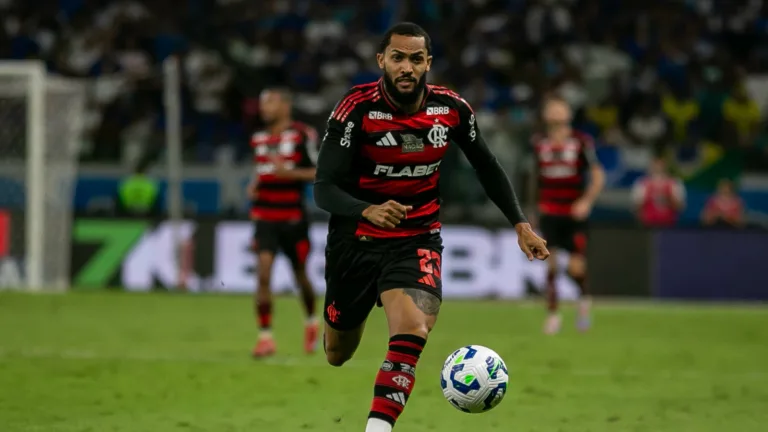
Flamengo vende Juninho para o Pumas, do México
Juninho em ação pelo Flamengo. (Crédito: Fernando Moreno/AGIF)Em meio à disputa da Copa Intercontinental, o Flamengo acertou a venda do atacante Juninho para o Pumas, do México, por 5 milhões de euros. A negociação foi fechada enquanto o clube rubro-negro está concentrado na competição internacional, e o jogador irá apenas após o encerramento da participação do Fla no torneio. A informação é da ESPN. PUBLICIDADE PUBLICIDADEO valor acordado com o Pumas é exatamente o mesmo que o Flamengo desembolsou para contratar Juninho junto ao Qarabag, do Azerbaijão, no início da temporada de 2025. Na ocasião, o centroavante foi a única contratação que gerou custo direto aos cofres rubro-negros naquela janela de transferências. O outro reforço anunciado no período foi o lateral Danilo, que chegou após ficar livre no mercado.LEIA MAIS: Vasco e Rayan chegam a acordo por novo contrato com […]
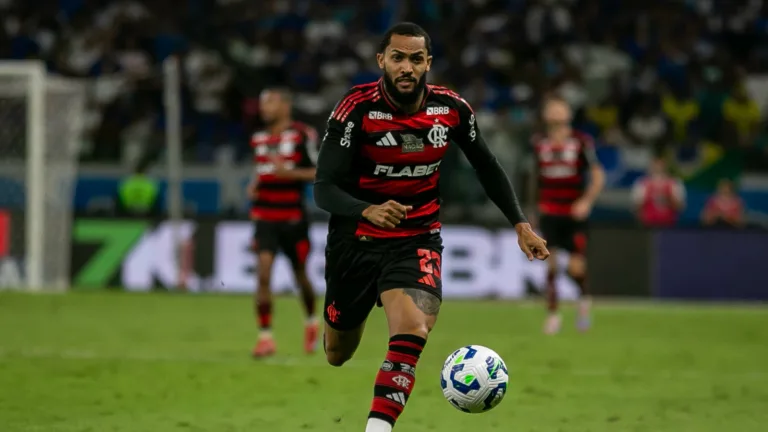
Flamengo vende Juninho para o Pumas, do México
Juninho em ação pelo Flamengo. (Crédito: Fernando Moreno/AGIF)Em meio à disputa da Copa Intercontinental, o Flamengo acertou a venda do atacante Juninho para o Pumas, do México, por 5 milhões de euros. A negociação foi fechada enquanto o clube rubro-negro está concentrado na competição internacional, e o jogador irá apenas após o encerramento da participação do Fla no torneio. A informação é da ESPN. PUBLICIDADE PUBLICIDADEO valor acordado com o Pumas é exatamente o mesmo que o Flamengo desembolsou para contratar Juninho junto ao Qarabag, do Azerbaijão, no início da temporada de 2025. Na ocasião, o centroavante foi a única contratação que gerou custo direto aos cofres rubro-negros naquela janela de transferências. O outro reforço anunciado no período foi o lateral Danilo, que chegou após ficar livre no mercado.LEIA MAIS: Vasco e Rayan chegam a acordo por novo contrato com […]
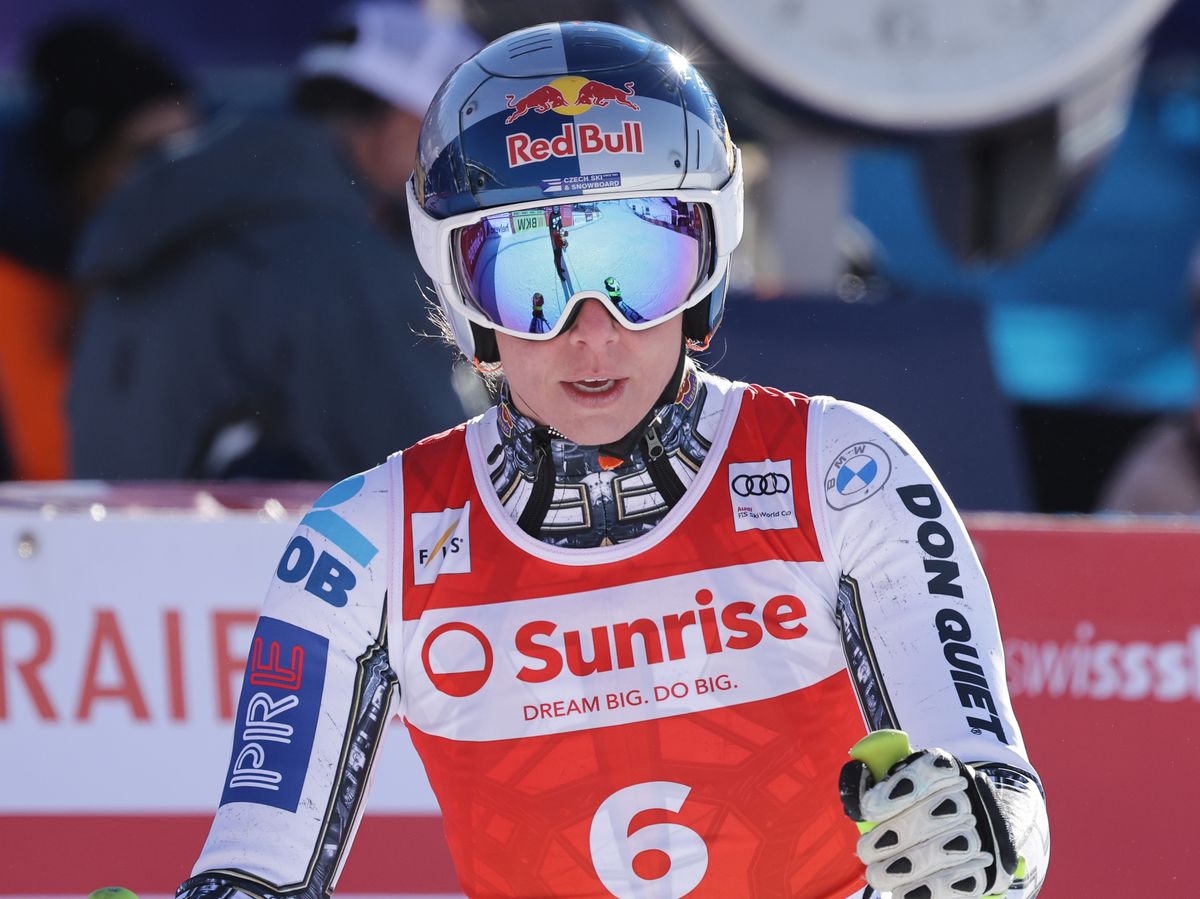
Obří slalom SP ve Val d’Isere ovládli Švýcaři. Vyhrál Meillard před Aernim a Odermattem
Meillard byl po prvním kole až pátý, ale nakonec si dojel pro osmý úspěch v kariéře. Zvítězil s náskokem 18 setin sekundy před Aernim, který si oproti úvodní jízdě polepšil o jedenáct míst, ale na premiérovou výhru stále čeká.Obhájce celkového prvenství ve Světovém poháru i malého glóbu za obří slalom Odermatt po prvním kole figuroval na čtvrté příčce. Za Meillardem nakonec zaostal o 33 setin.Švýcarskému triu na pódium pomohly i chyby nejlepší trojice lyžařů prvního kola. Jeho vítěz Stefan Brennsteiner se v konečném pořadí propadl na páté místo, druhý Nor Henrik Kristoffersen skončil jedenáctý a jeho krajan Timon Haugan klesl na čtvrtou pozici.V průběžném pořadí SP má Odermatt v čele náskok 260 bodů před Brennsteinerem. V hodnocení obřího slalomu úřadující olympijský šampion před rakouským soupeřem vede o 15 bodů.SP ve sjezdovém lyžování ve Val d'Isere (Francie):Muži - obří slalom:1. Meillard 2:10,07 (1:01,72+1:08,35)2. Aerni -0,18 (1:02,51+1:07,74)3. Odermatt (všichni Švýc.) -0,33 (1:01,61+1:08,79)4. Haugan (Nor.) -0,42 (1:01,48+1:09,01)5. Brennsteiner […]
Obří slalom SP ve Val d’Isere ovládli Švýcaři. Vyhrál Meillard před Aernim a Odermattem
Meillard byl po prvním kole až pátý, ale nakonec si dojel pro osmý úspěch v kariéře. Zvítězil s náskokem 18 setin sekundy před Aernim, který si oproti úvodní jízdě polepšil o jedenáct míst, ale na premiérovou výhru stále čeká.Obhájce celkového prvenství ve Světovém poháru i malého glóbu za obří slalom Odermatt po prvním kole figuroval na čtvrté příčce. Za Meillardem nakonec zaostal o 33 setin.Švýcarskému triu na pódium pomohly i chyby nejlepší trojice lyžařů prvního kola. Jeho vítěz Stefan Brennsteiner se v konečném pořadí propadl na páté místo, druhý Nor Henrik Kristoffersen skončil jedenáctý a jeho krajan Timon Haugan klesl na čtvrtou pozici.V průběžném pořadí SP má Odermatt v čele náskok 260 bodů před Brennsteinerem. V hodnocení obřího slalomu úřadující olympijský šampion před rakouským soupeřem vede o 15 bodů.SP ve sjezdovém lyžování ve Val d'Isere (Francie):Muži - obří slalom:1. Meillard 2:10,07 (1:01,72+1:08,35)2. Aerni -0,18 (1:02,51+1:07,74)3. Odermatt (všichni Švýc.) -0,33 (1:01,61+1:08,79)4. Haugan (Nor.) -0,42 (1:01,48+1:09,01)5. Brennsteiner […]
Obří slalom SP ve Val d’Isere ovládli Švýcaři. Vyhrál Meillard před Aernim a Odermattem
Meillard byl po prvním kole až pátý, ale nakonec si dojel pro osmý úspěch v kariéře. Zvítězil s náskokem 18 setin sekundy před Aernim, který si oproti úvodní jízdě polepšil o jedenáct míst, ale na premiérovou výhru stále čeká.Obhájce celkového prvenství ve Světovém poháru i malého glóbu za obří slalom Odermatt po prvním kole figuroval na čtvrté příčce. Za Meillardem nakonec zaostal o 33 setin.Švýcarskému triu na pódium pomohly i chyby nejlepší trojice lyžařů prvního kola. Jeho vítěz Stefan Brennsteiner se v konečném pořadí propadl na páté místo, druhý Nor Henrik Kristoffersen skončil jedenáctý a jeho krajan Timon Haugan klesl na čtvrtou pozici.V průběžném pořadí SP má Odermatt v čele náskok 260 bodů před Brennsteinerem. V hodnocení obřího slalomu úřadující olympijský šampion před rakouským soupeřem vede o 15 bodů.SP ve sjezdovém lyžování ve Val d'Isere (Francie):Muži - obří slalom:1. Meillard 2:10,07 (1:01,72+1:08,35)2. Aerni -0,18 (1:02,51+1:07,74)3. Odermatt (všichni Švýc.) -0,33 (1:01,61+1:08,79)4. Haugan (Nor.) -0,42 (1:01,48+1:09,01)5. Brennsteiner […]

Salah on bench for Liverpool vs Brighton LIVE!
FTFull Time AETAfter Extra Time LIVEThis is a live match. ETExtra Time HTHalf Time Liverpool vs Brighton and Hove Albion. Premier League. 3:00pm, Saturday 13th December 2025. Anfield.
Related
Flamengo vende Juninho para o Pumas, do México
Juninho em ação pelo Flamengo. (Crédito: Fernando Moreno/AGIF)Em meio à disputa da Copa Intercontinental, o Flamengo acertou a venda do atacante Juninho para o Pumas, do México, por 5 milhões de euros. A negociação foi fechada enquanto o clube rubro-negro está concentrado na competição internacional, e o jogador irá apenas após o encerramento da participação do Fla no torneio. A informação é da ESPN. PUBLICIDADE PUBLICIDADEO valor acordado com o Pumas é exatamente o mesmo que o Flamengo desembolsou para contratar Juninho junto ao Qarabag, do Azerbaijão, no início da temporada de 2025. Na ocasião, o centroavante foi a única contratação que gerou custo direto aos cofres rubro-negros naquela janela de transferências. O outro reforço anunciado no período foi o lateral Danilo, que chegou após ficar livre no mercado.LEIA MAIS: Vasco e Rayan chegam a acordo por novo contrato com […]
Flamengo vende Juninho para o Pumas, do México
Juninho em ação pelo Flamengo. (Crédito: Fernando Moreno/AGIF)Em meio à disputa da Copa Intercontinental, o Flamengo acertou a venda do atacante Juninho para o Pumas, do México, por 5 milhões de euros. A negociação foi fechada enquanto o clube rubro-negro está concentrado na competição internacional, e o jogador irá apenas após o encerramento da participação do Fla no torneio. A informação é da ESPN. PUBLICIDADE PUBLICIDADEO valor acordado com o Pumas é exatamente o mesmo que o Flamengo desembolsou para contratar Juninho junto ao Qarabag, do Azerbaijão, no início da temporada de 2025. Na ocasião, o centroavante foi a única contratação que gerou custo direto aos cofres rubro-negros naquela janela de transferências. O outro reforço anunciado no período foi o lateral Danilo, que chegou após ficar livre no mercado.LEIA MAIS: Vasco e Rayan chegam a acordo por novo contrato com […]
Obří slalom SP ve Val d’Isere ovládli Švýcaři. Vyhrál Meillard před Aernim a Odermattem
Meillard byl po prvním kole až pátý, ale nakonec si dojel pro osmý úspěch v kariéře. Zvítězil s náskokem 18 setin sekundy před Aernim, který si oproti úvodní jízdě polepšil o jedenáct míst, ale na premiérovou výhru stále čeká.Obhájce celkového prvenství ve Světovém poháru i malého glóbu za obří slalom Odermatt po prvním kole figuroval na čtvrté příčce. Za Meillardem nakonec zaostal o 33 setin.Švýcarskému triu na pódium pomohly i chyby nejlepší trojice lyžařů prvního kola. Jeho vítěz Stefan Brennsteiner se v konečném pořadí propadl na páté místo, druhý Nor Henrik Kristoffersen skončil jedenáctý a jeho krajan Timon Haugan klesl na čtvrtou pozici.V průběžném pořadí SP má Odermatt v čele náskok 260 bodů před Brennsteinerem. V hodnocení obřího slalomu úřadující olympijský šampion před rakouským soupeřem vede o 15 bodů.SP ve sjezdovém lyžování ve Val d'Isere (Francie):Muži - obří slalom:1. Meillard 2:10,07 (1:01,72+1:08,35)2. Aerni -0,18 (1:02,51+1:07,74)3. Odermatt (všichni Švýc.) -0,33 (1:01,61+1:08,79)4. Haugan (Nor.) -0,42 (1:01,48+1:09,01)5. Brennsteiner […]
Obří slalom SP ve Val d’Isere ovládli Švýcaři. Vyhrál Meillard před Aernim a Odermattem
Meillard byl po prvním kole až pátý, ale nakonec si dojel pro osmý úspěch v kariéře. Zvítězil s náskokem 18 setin sekundy před Aernim, který si oproti úvodní jízdě polepšil o jedenáct míst, ale na premiérovou výhru stále čeká.Obhájce celkového prvenství ve Světovém poháru i malého glóbu za obří slalom Odermatt po prvním kole figuroval na čtvrté příčce. Za Meillardem nakonec zaostal o 33 setin.Švýcarskému triu na pódium pomohly i chyby nejlepší trojice lyžařů prvního kola. Jeho vítěz Stefan Brennsteiner se v konečném pořadí propadl na páté místo, druhý Nor Henrik Kristoffersen skončil jedenáctý a jeho krajan Timon Haugan klesl na čtvrtou pozici.V průběžném pořadí SP má Odermatt v čele náskok 260 bodů před Brennsteinerem. V hodnocení obřího slalomu úřadující olympijský šampion před rakouským soupeřem vede o 15 bodů.SP ve sjezdovém lyžování ve Val d'Isere (Francie):Muži - obří slalom:1. Meillard 2:10,07 (1:01,72+1:08,35)2. Aerni -0,18 (1:02,51+1:07,74)3. Odermatt (všichni Švýc.) -0,33 (1:01,61+1:08,79)4. Haugan (Nor.) -0,42 (1:01,48+1:09,01)5. Brennsteiner […]
Obří slalom SP ve Val d’Isere ovládli Švýcaři. Vyhrál Meillard před Aernim a Odermattem
Meillard byl po prvním kole až pátý, ale nakonec si dojel pro osmý úspěch v kariéře. Zvítězil s náskokem 18 setin sekundy před Aernim, který si oproti úvodní jízdě polepšil o jedenáct míst, ale na premiérovou výhru stále čeká.Obhájce celkového prvenství ve Světovém poháru i malého glóbu za obří slalom Odermatt po prvním kole figuroval na čtvrté příčce. Za Meillardem nakonec zaostal o 33 setin.Švýcarskému triu na pódium pomohly i chyby nejlepší trojice lyžařů prvního kola. Jeho vítěz Stefan Brennsteiner se v konečném pořadí propadl na páté místo, druhý Nor Henrik Kristoffersen skončil jedenáctý a jeho krajan Timon Haugan klesl na čtvrtou pozici.V průběžném pořadí SP má Odermatt v čele náskok 260 bodů před Brennsteinerem. V hodnocení obřího slalomu úřadující olympijský šampion před rakouským soupeřem vede o 15 bodů.SP ve sjezdovém lyžování ve Val d'Isere (Francie):Muži - obří slalom:1. Meillard 2:10,07 (1:01,72+1:08,35)2. Aerni -0,18 (1:02,51+1:07,74)3. Odermatt (všichni Švýc.) -0,33 (1:01,61+1:08,79)4. Haugan (Nor.) -0,42 (1:01,48+1:09,01)5. Brennsteiner […]
Salah on bench for Liverpool vs Brighton LIVE!
FTFull Time AETAfter Extra Time LIVEThis is a live match. ETExtra Time HTHalf Time Liverpool vs Brighton and Hove Albion. Premier League. 3:00pm, Saturday 13th December 2025. Anfield.
Be the first to leave a comment