

 Sports
WNBA - English
Sports
WNBA - English
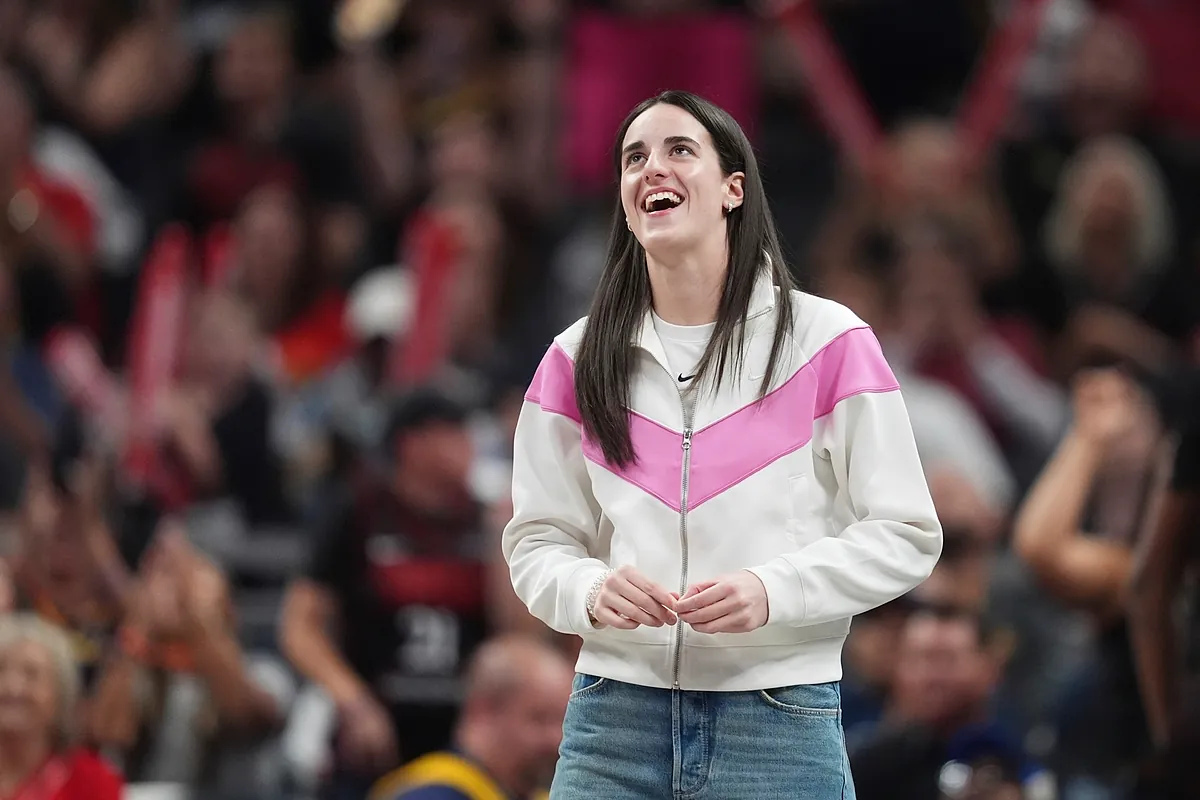
Dave Portnoy has again turned his spotlight toward the WNBA, this time taking aim at Commissioner Cathy Engelbert’s handling of remarks about star rookie Caitlin Clark, going as far as to suggest Clark could simply launch her own league.
Portnoy’s reaction comes in the wake of a blistering statement by Minnesota Lynx forward Napheesa Collier, who alleged that during private conversations Engelbert told her that Clark “should be grateful she makes $16 million off the court because without the platform the WNBA gives her, she wouldn’t make anything.”
Caitlin Clark proves she’s the baby whisperer
Collier also claimed Engelbert said that players “should be on their knees thanking their lucky stars for the media rights deal that I got them.”
Collier’s broad critique of league leadership further included, “We have the best players in the world. We have the best fans in the world. But right now we have the worst leadership in the world.”
Portnoy hits back at Engelbert
Those remarks struck a chord with Portnoy. He pushed back against what he saw as dismissive treatment of Clark’s value, and as usual, did not hold back his sarcasm.
Portnoy argued that the league’s internal logic was backwards: why ask a rising star to show gratitude for what should be her rightful earning potential? Instead, he framed the commissioner’s stance as tone-deaf and out of date with the WNBA’s current growth trajectory.
He went further, challenging the notion that Clark needs the WNBA more than it needs her. Portnoy floated the provocative notion: if the league is unwilling to recognize Clark’s market worth or support her properly, she could simply start a rival organization.
In his view, Clark already commands attention, fan support, and commercial appeal, factors that could sustain a competing venture.
Portnoy’s comments arrive amid escalating tensions between WNBA leadership and its players. Collier’s exit interview turned into a rally cry that spotlighted issues of compensation, respect, and structural inequities.
By amplifying those words and placing Clark at the center of the conflict, Portnoy thrust the rookie into the role of both supporter and lightning rod.
What is Caitlin Clark’s stance?
Clark herself had already spoken publicly about a related imbalance in tournament payouts. After Indiana Fever’s Commissioner’s Cup victory, she pointed out that her team received more money for that tournament than players would receive for winning the WNBA Finals.
“You get more (money) for this than you do if you’re the (WNBA Finals) champion … Someone tell (WNBA commissioner) Cathy (Engelbert) to help us out.” That comment gave added weight to Portnoy’s criticisms and Collier’s allegations.
While Portnoy is not a traditional voice in WNBA labor debates, his outspoken support for Clark and alignment with players’ frustrations gives him a unique platform.
He has previously weighed in on league finances, player pay, and commercial transparency, often with brash flair. This time, he used that voice to challenge the commissioner’s authority and assert that Clark needs neither permission nor gratitude to chart her own course.
Whether Portnoy’s suggestion that Clark start her own league is realistic or merely rhetorical remains debatable. But his words underscore a growing impatience among fans, commentators, and even outsider celebrities with how the WNBA values-publicly and privately-its headlining talents.
As Clark’s star continues to rise, the mismatch between her market value and her terms within the league may become harder to ignore.
This news was originally published on this post .

About the author


Phillip Rivers unretires?! + Do the Eagles have a Jalen Hurts problem after MNF collapse? (ft. Zach Berman)
Subscribe to Inside CoverageCould 44-year-old Philip Rivers help the ailing Colts? Yahoo Sports’ Andrew Siciliano, Charles Robinson, and Frank Schwab break down that scenario as well as the MNF matchup that saw the Los Angeles Chargers beat the Philadelphia Eagles. Later, Andrew sits down with The Athletic's Eagles reporter, Zach Berman, to talk all things Philly and Jalen Hurts. Finally, the crew looks at what teams could make it into the playoffs according to Frank's projections before giving their “One More Thing.”AdvertisementAdvertisementAdvertisement(0:36) - Philip Rivers signs to Colts' practice squad(19:48) - Chargers beat Eagles on MNF(33:51) - Zach Berman joins the show!(47:57) - Frank's Week 14 Playoff Projections(1:03:18) - One More ThingCould 44-year-old Philip Rivers help the ailing Indianapolis Colts? (Photo by Joe Sargent/Getty Images) (Photo by Joe Sargent/Getty Images)🖥️ Watch this full episode on YouTubeCheck out the rest of […]
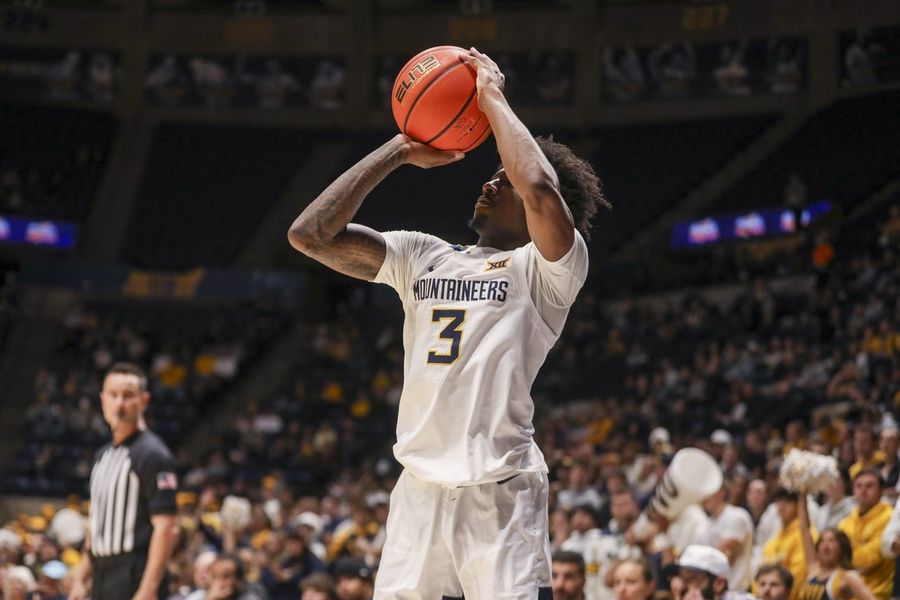
Honor Huff drills 8 3-pointers as West Virginia blasts Little Rock
Dec 3, 2025; Morgantown, West Virginia, USA; West Virginia Mountaineers guard Honor Huff (3) shoots a three pointer during the second half against the Coppin State Eagles at Hope Coliseum. Mandatory Credit: Ben Queen-Imagn Images Honor Huff scored a game-high 24 points as West Virginia rolled to a 90-58 win over Little Rock on Tuesday in Morgantown, W. Va. Huff connected on 8 of 11 3-point attempts for the Mountaineers (8-3). Treysen Eaglestaff tallied 23 points as he shot 8 of 14 from the field and 5-for-10 from beyond the arc. Chance Moore came off the bench to chip in 12 points and six rebounds. Cameron Wallace came off the bench to lead Little Rock (2-8) with 23 points and nine rebounds. Johnathan Lawson added 11 points for the Trojans, who have lost six straight games. The Mountaineers had their […]
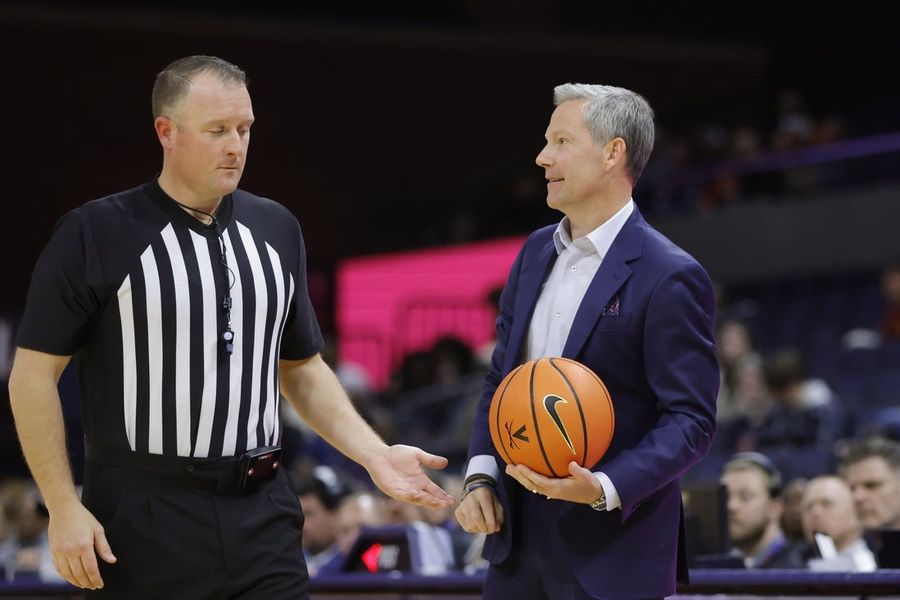
No. 24 Virginia uses early 3-point barrage to bury UMES
Nov 28, 2025; Charlottesville, Virginia, USA; Virginia Cavaliers head coach Ryan Odom holds the ball on the sidelines against the Queens University of Charlotte Royals during the second half at John Paul Jones Arena. Mandatory Credit: Amber Searls-Imagn Images Sam Lewis scored 15 points and contributed to a long-distance barrage as No. 24 Virginia rolled to an 84-60 victory over Maryland Eastern Shore on Tuesday in Charlottesville, Va. Chance Mallory delivered 10 points, five assists and six steals as the Cavaliers (9-1) won a day after crashing the AP Top 25 poll for the first time since February 2024. Thijs De Ridder provided 13 points and six rebounds for Virginia, which used its 3-point marksmanship to surge to a 23-point lead in the first half. In six home games, the Cavaliers have yet to trail at any point this season. […]

No. 4 Iowa State brimming with confidence ahead of Iowa game
Dec 6, 2025; West Lafayette, Indiana, USA; Iowa State Cyclones forward Milan Momcilovic (22) dribbles the ball during the first half against the Purdue Boilermakers at Mackey Arena. Mandatory Credit: Jacob Musselman-Imagn Images Fresh off one of the biggest upsets of all time, No. 4 Iowa State hosts its biggest rival on Thursday when Iowa visits Ames. The Cyclones (9-0) rolled to an 81-58 win at then-No. 1 Purdue on Saturday. The 23-point margin matched the worst home loss for a No. 1 team in AP Poll history. In shooting 54.1% from the field, Iowa State handed the Boilermakers their first nonconference home loss since 2019. The Cyclones drilled 11 3-pointers and shot 47.8% from beyond the arc. Milan Momcilovic racked up 20 points. It's the kind of win that had the 6-foot-8 junior forward brimming with confidence as he […]
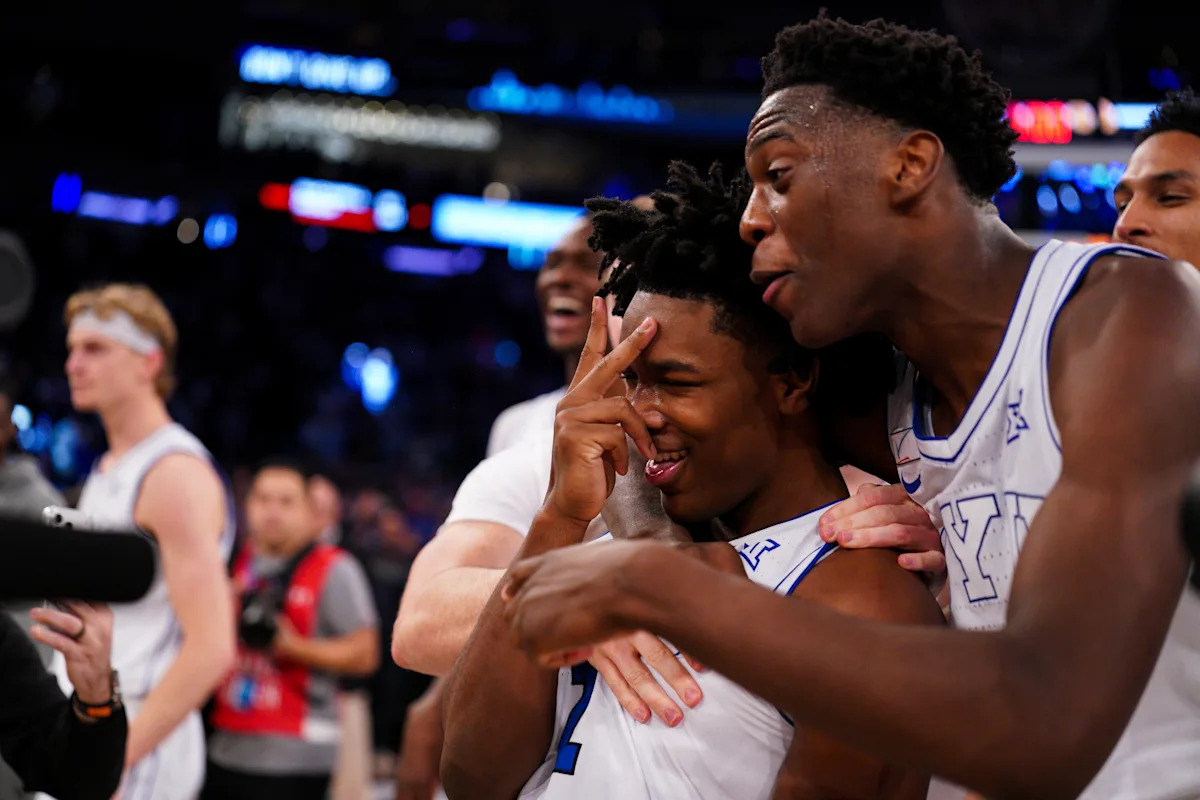
Robert Wright drains wild buzzer-beater to complete comeback, lift No. 10 BYU past Clemson
Robert Wright completed a massive comeback on Tuesday night with an incredible buzzer-beater at Madison Square Garden.The Cougars guard drained a game-winning 3-pointer as time expired to lift No. 10 BYU to a wild 67-64 win over Clemson in the Jimmy V Classic. That capped a 22-point comeback in the second half to avoid what would have been a significant upset loss for the Cougars as they wrap up their non-conference slate.AdvertisementAdvertisementAdvertisementAfter entering the locker room down by 21 points — BYU’s last made bucket in the first half came on a made 3-pointer from Wright with 6:59 left in the period — the Cougars slowly started chipping away at that deficit. They took the lead again late in the second half on a Keba Keita dunk, but Dillon Hunter made a layup with just five seconds left to tie […]
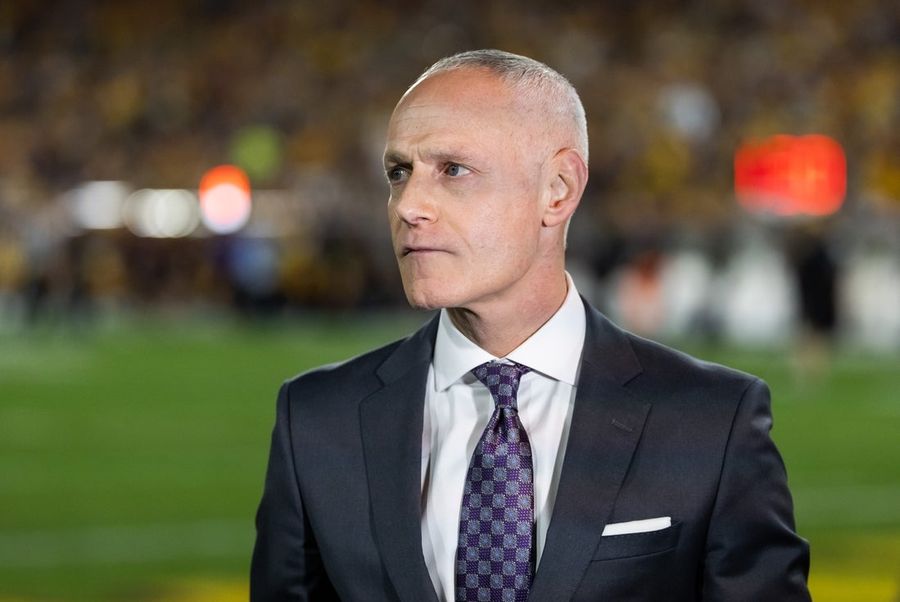
Big 12 commish Brett Yormark calls Notre Dame AD’s remarks ‘egregious’
Nov 28, 2025; Tempe, Arizona, USA; Big 12 Conference commissioner Brett Yormark in attendance of the Arizona State Sun Devils game against the Arizona Wildcats during the 99th Territorial Cup at Mountain America Stadium. Mandatory Credit: Mark J. Rebilas-Imagn Images Big 12 Conference commissioner Brett Yormark said Notre Dame athletic director Pete Bevacqua was "totally out of bounds" for how he's gone about criticizing the Atlantic Coast Conference this week. Notre Dame has a football scheduling alliance with the ACC and is a full member of the conference in other sports. Bevacqua has claimed the ACC damaged Notre Dame's chances at making the College Football Playoff as an at-large with how it campaigned for Miami's inclusion. Miami was the last at-large selected -- with the committee reasoning that the Hurricanes' head-to-head win over the Irish only mattered once they were […]
Related
Phillip Rivers unretires?! + Do the Eagles have a Jalen Hurts problem after MNF collapse? (ft. Zach Berman)
Subscribe to Inside CoverageCould 44-year-old Philip Rivers help the ailing Colts? Yahoo Sports’ Andrew Siciliano, Charles Robinson, and Frank Schwab break down that scenario as well as the MNF matchup that saw the Los Angeles Chargers beat the Philadelphia Eagles. Later, Andrew sits down with The Athletic's Eagles reporter, Zach Berman, to talk all things Philly and Jalen Hurts. Finally, the crew looks at what teams could make it into the playoffs according to Frank's projections before giving their “One More Thing.”AdvertisementAdvertisementAdvertisement(0:36) - Philip Rivers signs to Colts' practice squad(19:48) - Chargers beat Eagles on MNF(33:51) - Zach Berman joins the show!(47:57) - Frank's Week 14 Playoff Projections(1:03:18) - One More ThingCould 44-year-old Philip Rivers help the ailing Indianapolis Colts? (Photo by Joe Sargent/Getty Images) (Photo by Joe Sargent/Getty Images)🖥️ Watch this full episode on YouTubeCheck out the rest of […]
Honor Huff drills 8 3-pointers as West Virginia blasts Little Rock
Dec 3, 2025; Morgantown, West Virginia, USA; West Virginia Mountaineers guard Honor Huff (3) shoots a three pointer during the second half against the Coppin State Eagles at Hope Coliseum. Mandatory Credit: Ben Queen-Imagn Images Honor Huff scored a game-high 24 points as West Virginia rolled to a 90-58 win over Little Rock on Tuesday in Morgantown, W. Va. Huff connected on 8 of 11 3-point attempts for the Mountaineers (8-3). Treysen Eaglestaff tallied 23 points as he shot 8 of 14 from the field and 5-for-10 from beyond the arc. Chance Moore came off the bench to chip in 12 points and six rebounds. Cameron Wallace came off the bench to lead Little Rock (2-8) with 23 points and nine rebounds. Johnathan Lawson added 11 points for the Trojans, who have lost six straight games. The Mountaineers had their […]
No. 24 Virginia uses early 3-point barrage to bury UMES
Nov 28, 2025; Charlottesville, Virginia, USA; Virginia Cavaliers head coach Ryan Odom holds the ball on the sidelines against the Queens University of Charlotte Royals during the second half at John Paul Jones Arena. Mandatory Credit: Amber Searls-Imagn Images Sam Lewis scored 15 points and contributed to a long-distance barrage as No. 24 Virginia rolled to an 84-60 victory over Maryland Eastern Shore on Tuesday in Charlottesville, Va. Chance Mallory delivered 10 points, five assists and six steals as the Cavaliers (9-1) won a day after crashing the AP Top 25 poll for the first time since February 2024. Thijs De Ridder provided 13 points and six rebounds for Virginia, which used its 3-point marksmanship to surge to a 23-point lead in the first half. In six home games, the Cavaliers have yet to trail at any point this season. […]
No. 4 Iowa State brimming with confidence ahead of Iowa game
Dec 6, 2025; West Lafayette, Indiana, USA; Iowa State Cyclones forward Milan Momcilovic (22) dribbles the ball during the first half against the Purdue Boilermakers at Mackey Arena. Mandatory Credit: Jacob Musselman-Imagn Images Fresh off one of the biggest upsets of all time, No. 4 Iowa State hosts its biggest rival on Thursday when Iowa visits Ames. The Cyclones (9-0) rolled to an 81-58 win at then-No. 1 Purdue on Saturday. The 23-point margin matched the worst home loss for a No. 1 team in AP Poll history. In shooting 54.1% from the field, Iowa State handed the Boilermakers their first nonconference home loss since 2019. The Cyclones drilled 11 3-pointers and shot 47.8% from beyond the arc. Milan Momcilovic racked up 20 points. It's the kind of win that had the 6-foot-8 junior forward brimming with confidence as he […]
Robert Wright drains wild buzzer-beater to complete comeback, lift No. 10 BYU past Clemson
Robert Wright completed a massive comeback on Tuesday night with an incredible buzzer-beater at Madison Square Garden.The Cougars guard drained a game-winning 3-pointer as time expired to lift No. 10 BYU to a wild 67-64 win over Clemson in the Jimmy V Classic. That capped a 22-point comeback in the second half to avoid what would have been a significant upset loss for the Cougars as they wrap up their non-conference slate.AdvertisementAdvertisementAdvertisementAfter entering the locker room down by 21 points — BYU’s last made bucket in the first half came on a made 3-pointer from Wright with 6:59 left in the period — the Cougars slowly started chipping away at that deficit. They took the lead again late in the second half on a Keba Keita dunk, but Dillon Hunter made a layup with just five seconds left to tie […]
Big 12 commish Brett Yormark calls Notre Dame AD’s remarks ‘egregious’
Nov 28, 2025; Tempe, Arizona, USA; Big 12 Conference commissioner Brett Yormark in attendance of the Arizona State Sun Devils game against the Arizona Wildcats during the 99th Territorial Cup at Mountain America Stadium. Mandatory Credit: Mark J. Rebilas-Imagn Images Big 12 Conference commissioner Brett Yormark said Notre Dame athletic director Pete Bevacqua was "totally out of bounds" for how he's gone about criticizing the Atlantic Coast Conference this week. Notre Dame has a football scheduling alliance with the ACC and is a full member of the conference in other sports. Bevacqua has claimed the ACC damaged Notre Dame's chances at making the College Football Playoff as an at-large with how it campaigned for Miami's inclusion. Miami was the last at-large selected -- with the committee reasoning that the Hurricanes' head-to-head win over the Irish only mattered once they were […]
Be the first to leave a comment