



Mohamed Salah scored a stoppage-time winner as Egypt fought back to begin their Africa Cup of Nations (AFCON) campaign with a dramatic victory over Zimbabwe.
Liverpool striker Salah had been the focus of plenty of attention before the tournament after recent events at club level and for a while it seemed his difficult season might be about to take another turn for the worse.
Advertisement
Egypt are among the favourites to win this competition in Morocco but they were stunned when the Warriors, who are ranked 129th in the world, took a first-half lead.
Prince Dube’s low strike came against the run of play in Agadir and it threatened to be decisive.
But the Pharaohs attacked relentlessly and finally found a way past 40-year-old goalkeeper Washington Arubi when Manchester City forward Omar Marmoush smashed in from a narrow angle midway through the second half.
Salah was heavily involved during the first period but his influence faded during the second. However, Egypt’s captain — almost inevitably — grabbed the headlines when he swivelled inside the area and fired past Arubi in the 91st minute.
The victory leaves Egypt in a good position to advance from Group B. Earlier in the day, South Africa beat Angola 2-1, a result which meant avoiding an upset against Zimbabwe was all the more important for Salah and his team-mates.
Ahmed Walid and Nnamdi Onyeagwara analyse the main talking points.
How did Salah play?
Mohamed Salah is hoping to put his club troubles to one side during AFCON (Franck Fife/AFP via Getty Images)
When looking back through the careers of Egypt’s greatest players, most of them had the prestige of winning AFCON. Rifaat El Fanagily in 1957 and 1959, Mahmoud El Khatib and Taher Abouzeid in 1986, Hossam Hassan in 1986, 1998 and 2006, plus Mohamed Aboutrika alongside a plethora of talent in 2006 and 2008 to name just a few examples.
The names above might be unfamiliar to most, but Salah will be aware of them.
Despite leading Egypt to two World Cup tournaments, in 2018 and 2026, he has not yet won his own continent’s biggest prize, finishing as a runner-up in 2017 and 2021.
In addition, the recent events at Liverpool have only made this AFCON bigger for Salah, who has wanted to win this competition for many years.
In this opening match against Zimbabwe, his creativity was on full display, putting Trezeguet and Emam Ashour in goalscoring situations in the first 15 minutes, linking the play from a narrower position in the right half-space at times, and his corners were effective too.
Advertisement
Salah’s impact faded after the half-time break, when there was less space to attack. But he did have a chance to make it 2-1 with a run in behind the defence in the 77th minute, only to miss the target.
As the second half went on, it felt like Salah’s dream of carrying Egypt to the trophy might be hitting another stumbling block.
However, AFCON scripts never fail to disappoint and, in stoppage time, he scored a scruffy winner to earn Egypt a deserved three points.
It remains to be seen if Salah can carry his nation to glory in Rabat on January 18, but his first-half display and winner are encouraging signs.
Ahmed Walid
Did Egypt deserve to win or did they get away with it?
This was supposed to be Egypt’s easiest match in the group. They had to win the three points against Zimbabwe before facing South Africa and Angola, but needing a stoppage-time goal from Salah to do so did not entirely reflect the performance.
Egypt’s performance on the ball in the first half was impressive, creating plenty of chances from the wide areas and they were unfortunate not to be ahead, let alone to find themselves behind at the break.
The switches of play from Hamdi Fathy to Salah helped Egypt progress the ball into the final third and they were able to create from wide areas. Trezeguet’s early header from a Salah cross was cleared off the line.
When Marmoush was moved to the No 10 position, he linked the attack well and had space to shoot from outside the penalty area but could not score.
Yet, it was Egypt’s out-of-possession display which raised plenty of questions. A 15-minute spell when their left side was played through on multiple occasions led to Zimbabwe’s goal.
Another area where Egypt looked vulnerable was on the defensive transitions, which is ironic considering Hassan opted to play with a more defensive-minded midfield in Hamdy Fathy and Marwan Attia.
Advertisement
The game state meant Zimbabwe could drop deeper and defend in a low block, which afforded Egypt less space to attack, leaving only the wide areas.
It was down the left where Egypt threatened after the break, with Marmoush attacking the space behind Zimbabwe’s right-back to score the equaliser.
Another cross from the left wing brought them close to the winner when Ahmed Sayed Zizo missed a header from close range.
The number and quality of chances Egypt missed in this match summarised a game in which they did not have the clinical edge and were punished for their defensive mistakes — until Salah’s late, decisive intervention.
Their star performers combined in the build-up to the second goal to earn Hassan’s side a valuable three points. Marmoush won the ball in midfield to start a transition, which was finished by Salah. It was scruffy but so important for Egypt.
Ahmed Walid
How unfortunate were Zimbabwe?
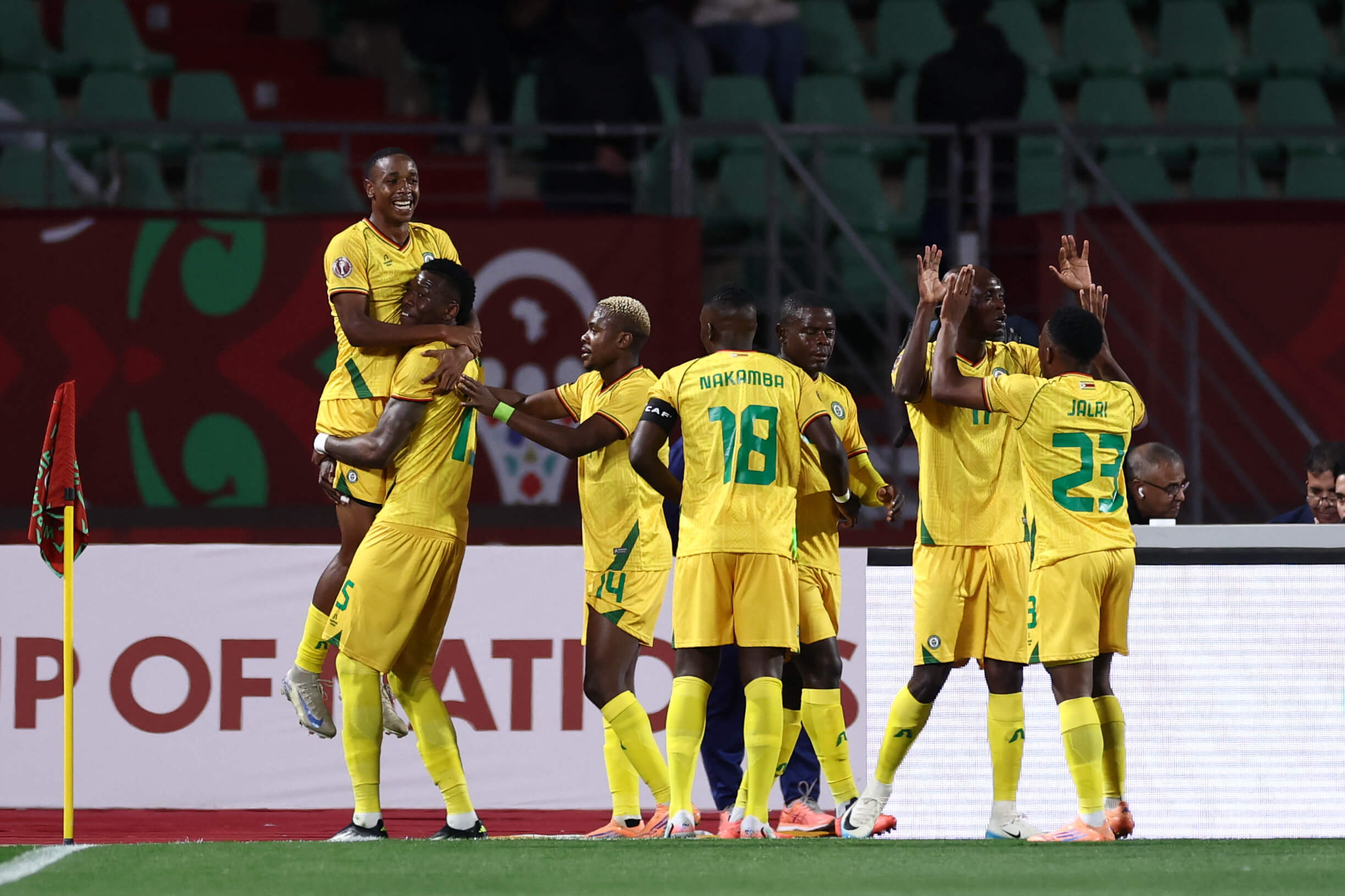
Prince Dube scores Zimbabwe’s first goal of this year’s Africa Cup of Nations (Franck Fife/AFP via Getty Images)
Entering this tournament, hopes were not particularly high for Zimbabwe.
Their manager, Mario Marinica, was only appointed to the role on November 4, and had only two games in charge leading into this tournament.
Zimbabwe’s star centre-back and highest-profile player Marshall Munetsi, who plays for Premier League side Wolverhampton Wanderers, spoke earlier this month of his “hurt” at not being able to compete with his team in Morocco due to a medical issue.
They last won an AFCON game when they achieved a 2-1 victory over Guinea in January 2022 and came into the competition with one win from seven matches.
They rode their luck against Egypt, with the seven-time champions peppering their goal with shots and spurning a host of chances.
But they were also able to counter-attack, commit tactical fouls to slow down Egypt’s rhythm and worry the Pharaohs’ defence too.
This performance will give them hope that they will be able to make it out of the group stage at an AFCON for the first time in the nation’s history, even though their prospects were dented significantly by Salah’s late strike.
Nnamdi Onyeagwara
What next for Egypt?
Friday, December 26: South Africa, AFCON Group B, 3pm UK, 10am ET
What next for Zimbabwe?
Friday, December 26: Angola, AFCON Group B, 12.30pm UK, 7.30am ET
This news was originally published on this post .

About the author

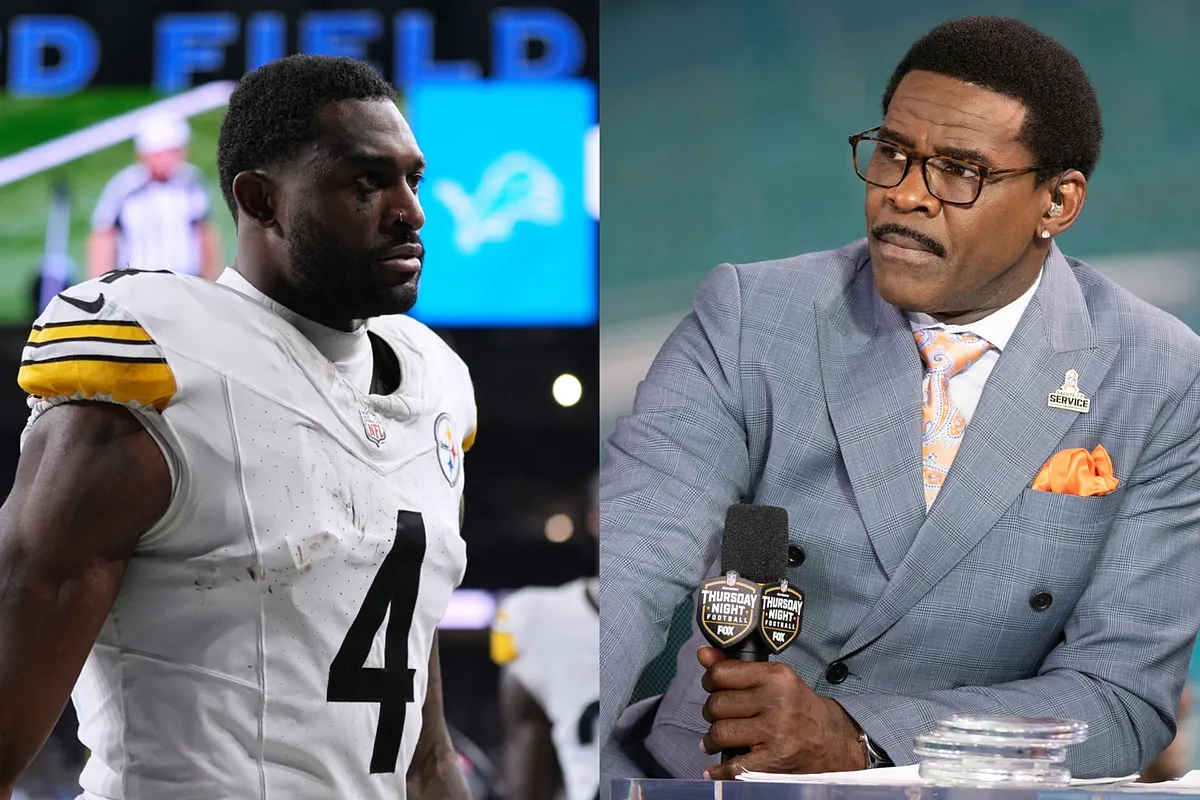
Michael Irvin slams DK Metcalf for hitting a fan: “I don’t care what he said”
The incident involving DK Metcalf this Sunday during the game against the Detroit Lions continues to spark debate. Former Dallas Cowboys star Michael Irvin has now weighed in on the Pittsburgh Steelers wide receiver's conduct-and his remarks were far from forgiving. Footage of Metcalf approaching the stands at Ford Field, arguing with a fan, grabbing him by the neck, and then throwing a punch has gone viral. A source close to Metcalf told NFL Network's Tom Pelissero that the fan, identified as Ryan Kennedy, directed a racial slur at the player and insulted his mother. Videos recorded by spectators appear to contradict the Steelers star's version of events. Regardless of the circumstances, Irvin sharply criticized Metcalf's actions.Irvin blasts Metcalf for confronting a fanSpeaking on his podcast Come and Talk 2 Me, Irvin noted that players hear all kinds of things […]
Vladař vychytal Philadelphii výhru nad Vancouverem
Vladař dlouho držel naději na první čisté konto v ročníku. Připravil ho o něj až v 54. minutě Max Sasson, když vyšel úspěšně ze souboje jeden na jednoho a střelou mezi nohy snížil na 1:3.Domácí Philadelphii poslal do vedení v 34. minutě Nikita Grebjonkin. Vítězství si pak hokejisté Flyers zajistili kanonádou v poslední dvacetiminutovce, kdy se radovali ze čtyř gólů.Úspěšní v zakončení byli Carl Grundström, Christian Dvorak, Owen Tippett a do prázdné branky přesně mířící ruský mladík Matvej Mičkov. Sedmnáct sekund před koncem zmírnil porážku Canucks ještě Drew O'Connor.Za kanadský celek nastoupili obránce Filip Hronek i útočník David Kämpf. Hronek strávil na ledě nejvíce času z týmu, přes 22 minut. Na Vladaře vystřelil dvakrát, ve statistice plus/minus měl čtyři záporné body. Kämpf byl u jednoho obdrženého gólu.Flyers bodovali v sedmi z posledních osmi zápasů a ve Východní konferenci jsou třetí. Stejný počet 43 bodů mají i Washington, Tampa Bay a Montreal. Canucks neuspěli po čtyřech výhrách.Tampa Bay šla do vedení […]
Vladař vychytal Philadelphii výhru nad Vancouverem
Vladař dlouho držel naději na první čisté konto v ročníku. Připravil ho o něj až v 54. minutě Max Sasson, když vyšel úspěšně ze souboje jeden na jednoho a střelou mezi nohy snížil na 1:3.Domácí Philadelphii poslal do vedení v 34. minutě Nikita Grebjonkin. Vítězství si pak hokejisté Flyers zajistili kanonádou v poslední dvacetiminutovce, kdy se radovali ze čtyř gólů.Úspěšní v zakončení byli Carl Grundström, Christian Dvorak, Owen Tippett a do prázdné branky přesně mířící ruský mladík Matvej Mičkov. Sedmnáct sekund před koncem zmírnil porážku Canucks ještě Drew O'Connor.Za kanadský celek nastoupili obránce Filip Hronek i útočník David Kämpf. Hronek strávil na ledě nejvíce času z týmu, přes 22 minut. Na Vladaře vystřelil dvakrát, ve statistice plus/minus měl čtyři záporné body. Kämpf byl u jednoho obdrženého gólu.Flyers bodovali v sedmi z posledních osmi zápasů a ve Východní konferenci jsou třetí. Stejný počet 43 bodů mají i Washington, Tampa Bay a Montreal. Canucks neuspěli po čtyřech výhrách.Tampa Bay šla do vedení […]
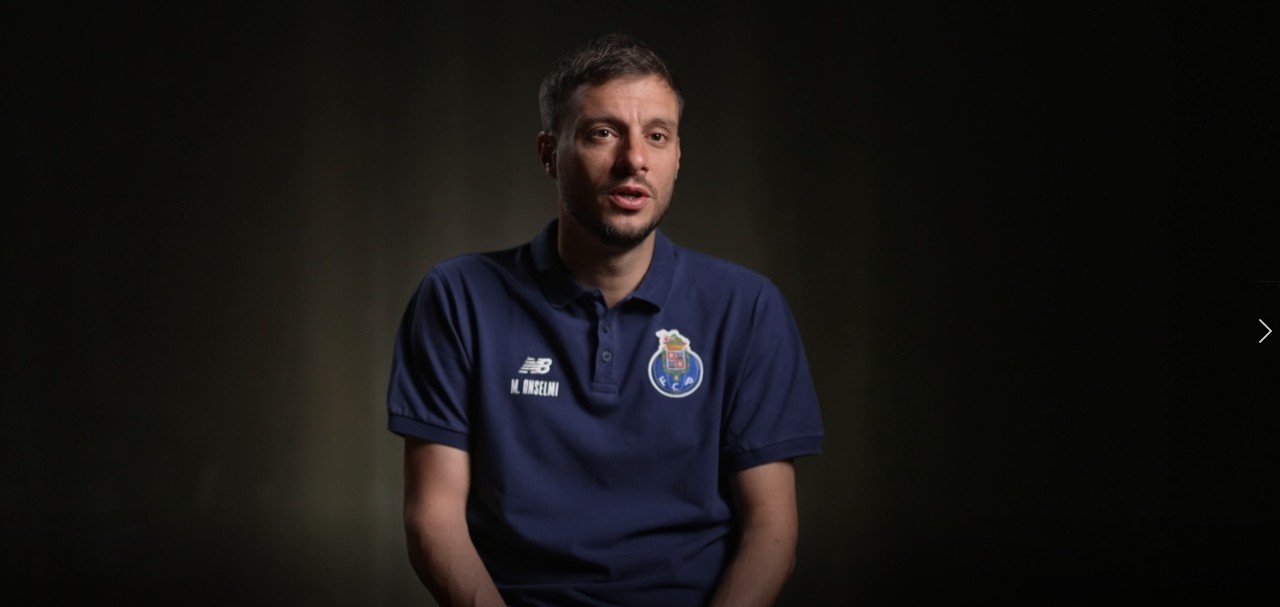
Entenda o que o Botafogo espera de Martín Anselmi no estilo tático e na animosidade
Acertado com o Botafogo, Martín Anselmi chegará no clube com a responsabilidade de tentar colocar em prática o famigerado "Botafogo Way". A ideia é ter, com o técnico argentino, um time que apresente um futebol ofensivo com força física, velocidade e inteligência. E a cúpula de futebol do alvinegro entendeu que o profissional seria capaz disso após estudar seu estilo de jogo nos clubes por onde passou e entrevista-lo, com direito a apresentação em vídeo por parte dele. A avaliação sobre Anselmi é de que o treinador possui estilos táticos bem definidos e com forte poder motivacional, o que o torna capaz de fazer com que os jogadores sigam seu modelo de jogo de forma fiel. Isso era uma insatisfação na época de Davide Ancelotti, pois os diretores acreditavam que alguns jogadores abandonavam o plano estipulado na ânsia de marcar […]

4 Takeaways From the 49ers’ Win Over the Colts
The San Francisco 49ers look like they're getting hot at the right time.San Francisco beat the Indianapolis Colts 48-27 on Monday night for its fifth straight game. The 49ers are 11-4 and remain a game behind the Seattle Seahawks (12-3) for the top spot in the NFC West. San Francisco has won double-digit games in 29 seasons in its history, which is tied with the Patriots for the third most in NFL history.The Colts dropped to 8-7 on the year with the loss and snapped a five-game winning streak over the 49ers that dated back to 2005.<!-->Here are my takeaways:1. Brock Purdy is cooking for San FranciscoPurdy improved to 5-0 as a starter since returning from a turf toe injury by completing 73.5% of his passes for 295 yards and a career-high five touchdowns with one interception, posting a 126.8 […]
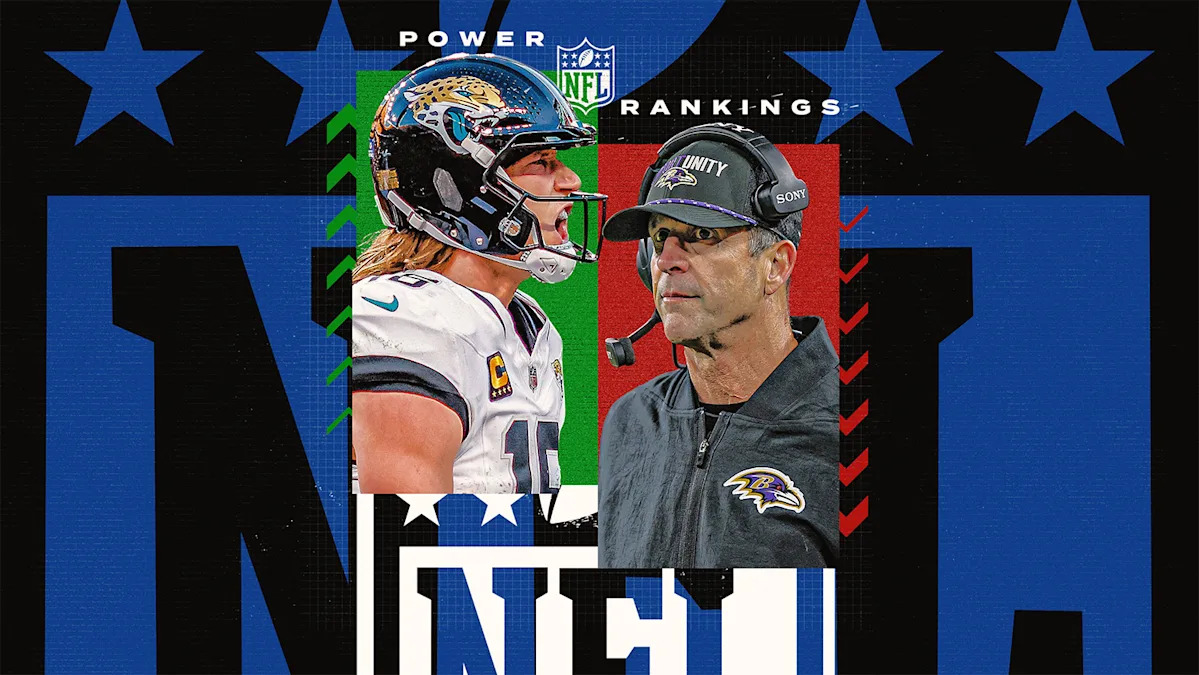
NFL Power Rankings entering Week 17: Ravens’ disastrous season raises questions about John Harbaugh
AFC East: Buffalo Bills | Miami Dolphins | New England Patriots | New York JetsAFC North: Baltimore Ravens | Cincinnati Bengals | Cleveland Browns | Pittsburgh SteelersAFC South: Houston Texans | Indianapolis Colts | Jacksonville Jaguars | Tennessee TitansAFC West: Denver Broncos | Kansas City Chiefs | Las Vegas Raiders | Los Angeles ChargersNFC East: Dallas Cowboys | New York Giants | Philadelphia Eagles | Washington CommandersNFC North: Chicago Bears | Detroit Lions | Green Bay Packers | Minnesota VikingsNFC South: Atlanta Falcons | Carolina Panthers | New Orleans Saints | Tampa Bay BuccaneersNFC West: Arizona Cardinals | Los Angeles Rams | San Francisco 49ers | Seattle SeahawksAdvertisementAdvertisementAdvertisementWhen Derrick Henry scored his second touchdown of the game Sunday night, it put the Baltimore Ravens ahead 24-13 with 12:40 left. That was the last snap Henry played, and the New England […]
Related
Michael Irvin slams DK Metcalf for hitting a fan: “I don’t care what he said”
The incident involving DK Metcalf this Sunday during the game against the Detroit Lions continues to spark debate. Former Dallas Cowboys star Michael Irvin has now weighed in on the Pittsburgh Steelers wide receiver's conduct-and his remarks were far from forgiving. Footage of Metcalf approaching the stands at Ford Field, arguing with a fan, grabbing him by the neck, and then throwing a punch has gone viral. A source close to Metcalf told NFL Network's Tom Pelissero that the fan, identified as Ryan Kennedy, directed a racial slur at the player and insulted his mother. Videos recorded by spectators appear to contradict the Steelers star's version of events. Regardless of the circumstances, Irvin sharply criticized Metcalf's actions.Irvin blasts Metcalf for confronting a fanSpeaking on his podcast Come and Talk 2 Me, Irvin noted that players hear all kinds of things […]
Vladař vychytal Philadelphii výhru nad Vancouverem
Vladař dlouho držel naději na první čisté konto v ročníku. Připravil ho o něj až v 54. minutě Max Sasson, když vyšel úspěšně ze souboje jeden na jednoho a střelou mezi nohy snížil na 1:3.Domácí Philadelphii poslal do vedení v 34. minutě Nikita Grebjonkin. Vítězství si pak hokejisté Flyers zajistili kanonádou v poslední dvacetiminutovce, kdy se radovali ze čtyř gólů.Úspěšní v zakončení byli Carl Grundström, Christian Dvorak, Owen Tippett a do prázdné branky přesně mířící ruský mladík Matvej Mičkov. Sedmnáct sekund před koncem zmírnil porážku Canucks ještě Drew O'Connor.Za kanadský celek nastoupili obránce Filip Hronek i útočník David Kämpf. Hronek strávil na ledě nejvíce času z týmu, přes 22 minut. Na Vladaře vystřelil dvakrát, ve statistice plus/minus měl čtyři záporné body. Kämpf byl u jednoho obdrženého gólu.Flyers bodovali v sedmi z posledních osmi zápasů a ve Východní konferenci jsou třetí. Stejný počet 43 bodů mají i Washington, Tampa Bay a Montreal. Canucks neuspěli po čtyřech výhrách.Tampa Bay šla do vedení […]
Vladař vychytal Philadelphii výhru nad Vancouverem
Vladař dlouho držel naději na první čisté konto v ročníku. Připravil ho o něj až v 54. minutě Max Sasson, když vyšel úspěšně ze souboje jeden na jednoho a střelou mezi nohy snížil na 1:3.Domácí Philadelphii poslal do vedení v 34. minutě Nikita Grebjonkin. Vítězství si pak hokejisté Flyers zajistili kanonádou v poslední dvacetiminutovce, kdy se radovali ze čtyř gólů.Úspěšní v zakončení byli Carl Grundström, Christian Dvorak, Owen Tippett a do prázdné branky přesně mířící ruský mladík Matvej Mičkov. Sedmnáct sekund před koncem zmírnil porážku Canucks ještě Drew O'Connor.Za kanadský celek nastoupili obránce Filip Hronek i útočník David Kämpf. Hronek strávil na ledě nejvíce času z týmu, přes 22 minut. Na Vladaře vystřelil dvakrát, ve statistice plus/minus měl čtyři záporné body. Kämpf byl u jednoho obdrženého gólu.Flyers bodovali v sedmi z posledních osmi zápasů a ve Východní konferenci jsou třetí. Stejný počet 43 bodů mají i Washington, Tampa Bay a Montreal. Canucks neuspěli po čtyřech výhrách.Tampa Bay šla do vedení […]
Entenda o que o Botafogo espera de Martín Anselmi no estilo tático e na animosidade
Acertado com o Botafogo, Martín Anselmi chegará no clube com a responsabilidade de tentar colocar em prática o famigerado "Botafogo Way". A ideia é ter, com o técnico argentino, um time que apresente um futebol ofensivo com força física, velocidade e inteligência. E a cúpula de futebol do alvinegro entendeu que o profissional seria capaz disso após estudar seu estilo de jogo nos clubes por onde passou e entrevista-lo, com direito a apresentação em vídeo por parte dele. A avaliação sobre Anselmi é de que o treinador possui estilos táticos bem definidos e com forte poder motivacional, o que o torna capaz de fazer com que os jogadores sigam seu modelo de jogo de forma fiel. Isso era uma insatisfação na época de Davide Ancelotti, pois os diretores acreditavam que alguns jogadores abandonavam o plano estipulado na ânsia de marcar […]
4 Takeaways From the 49ers’ Win Over the Colts
The San Francisco 49ers look like they're getting hot at the right time.San Francisco beat the Indianapolis Colts 48-27 on Monday night for its fifth straight game. The 49ers are 11-4 and remain a game behind the Seattle Seahawks (12-3) for the top spot in the NFC West. San Francisco has won double-digit games in 29 seasons in its history, which is tied with the Patriots for the third most in NFL history.The Colts dropped to 8-7 on the year with the loss and snapped a five-game winning streak over the 49ers that dated back to 2005.<!-->Here are my takeaways:1. Brock Purdy is cooking for San FranciscoPurdy improved to 5-0 as a starter since returning from a turf toe injury by completing 73.5% of his passes for 295 yards and a career-high five touchdowns with one interception, posting a 126.8 […]
NFL Power Rankings entering Week 17: Ravens’ disastrous season raises questions about John Harbaugh
AFC East: Buffalo Bills | Miami Dolphins | New England Patriots | New York JetsAFC North: Baltimore Ravens | Cincinnati Bengals | Cleveland Browns | Pittsburgh SteelersAFC South: Houston Texans | Indianapolis Colts | Jacksonville Jaguars | Tennessee TitansAFC West: Denver Broncos | Kansas City Chiefs | Las Vegas Raiders | Los Angeles ChargersNFC East: Dallas Cowboys | New York Giants | Philadelphia Eagles | Washington CommandersNFC North: Chicago Bears | Detroit Lions | Green Bay Packers | Minnesota VikingsNFC South: Atlanta Falcons | Carolina Panthers | New Orleans Saints | Tampa Bay BuccaneersNFC West: Arizona Cardinals | Los Angeles Rams | San Francisco 49ers | Seattle SeahawksAdvertisementAdvertisementAdvertisementWhen Derrick Henry scored his second touchdown of the game Sunday night, it put the Baltimore Ravens ahead 24-13 with 12:40 left. That was the last snap Henry played, and the New England […]
Be the first to leave a comment