

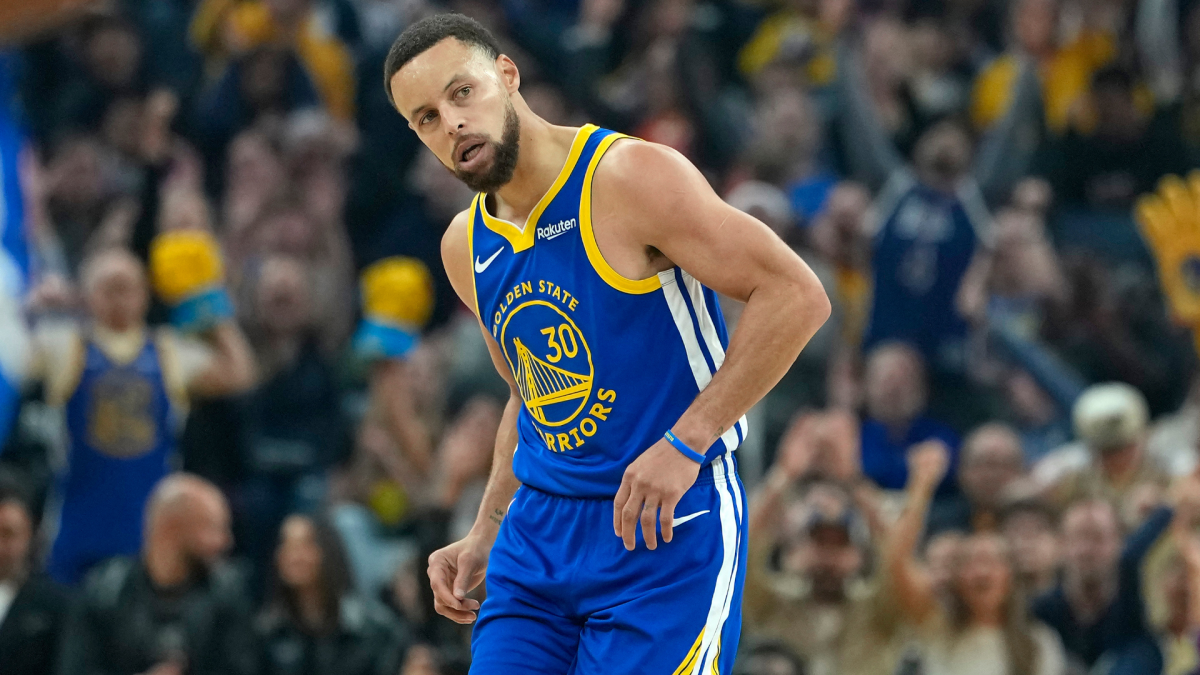

The Golden State Warriors eked out a 119-116 win over the Phoenix Suns on Saturday, and if you went off the exhilaration in play-by-play broadcaster Bob Fitzgerald’s voice with every play the team made to inch closer to victory you would’ve thought Stephen Curry was drawing in on a fifth championship.
Usually Fitzgerald is way over the top in just about every way, but in this case it was a really big win. Which is sort of a problem. You know your season is skidding to stay on the track when a three-point triumph over the Suns, at home, in December, to improve your record to 14-15 is actually being celebrated.
That’s how desperate the Warriors have become for anything positive to latch on to of late. They’ve lost 10 of their last 14. The win over Phoenix snapped a three-game skid that coincided with Curry’s return from a two-week absence in which the Warriors were finding hope in Pat Freaking Spencer.
Again, no knock on Spencer, but you’re really reaching if you expect to contend for a championship and Pat Spencer pulling rabbits out of his hat is your recipe for success. The Warriors, plain and simple, just haven’t been a good team this season. There are a number of reasons for that, but there is one extremely alarming stat that has been, perhaps, the principle thorn in Golden State’s side.
From NBA.com’s Jon Schuhmann:
The Warriors have seen the league’s biggest drop in shot-opportunity differential, from +3.8 (fourth) last season to -1.1 (20th) this season. They’ve seen the league’s second biggest jump in turnover rate, it’s fifth biggest drop in offensive rebounding percentage and its sixth biggest drop in defensive rebounding percentage.
Shot opportunities are different than pure possessions. You can, for example, turn the ball over and it still counts as a possession. If you give up an offensive rebound, that’s still considered the same possession.
By contrast, if you turn the ball over, you lose out on a shot opportunity, and if you give up an offensive rebound, that is an extra shot opportunity for your opponent. So let’s say the Warriors turn the ball over against the Rockets, who then go down on other end and miss two shots but grab both of the available offensive rebounds before finally making the third shot. That would be one possession for each team, but it would be zero shot opportunities for the Warriors against three for the Rockets.
Over the course of games, and, ultimately, seasons, NBA basketball has become about getting more shots at the basket than your opponent. That’s why teams are jacking up horrible 2-for-1 shots at the end of quarters, because even horrible shots are shots and it’s a numbers game. Same as soccer or hockey. If you get more shots on goal than your opponent, your chances of winning rise dramatically.
So for the Warriors, that seemingly little -1.1 number is a big deal. That means they are getting, on average, 1.1 fewer shots per game than their opponents, whereas last year they were getting 3.8 more. This number has totally flipped for two main reasons: Because the Warriors are turning the ball over on 16.2% of their possessions this year (up from 14.2% last year), and because they give up 12.1 offensive rebounds per game, the fourth most in the league.
Now, the Warriors’ currently third-ranked defense does force its opponents into a lot of turnovers, too, and they grab 11.5 of their own offensive rebounds per game. They also shoot 22.2 free throws per game while giving up 23 to their opponents.
On their own, those are all fairly small discrepancies. But they add up to a negative shot-opportunity ratio. Or, put another way, they have erased the significant shot-opportunity advantage the Warriors enjoyed last season, and these days the Warriors need every advantage they can get.
See, that’s the difference in the Warriors now as opposed to the juggernaut they once were. In the dynasty years, they had the firepower to render mistakes moot. They could turn the ball over like crazy (which they did) or give up a gazillion offensive rebounds, which they also did (bottom five 2014-2016 and dead last in Kevin Durant’s first season), and it didn’t matter because they had the firepower to shoot their way out of any hole and then some.
Now they don’t. They have the 21st-ranked offense. Steve Kerr has been hammering the turnover point all season. He believes it’s the number one reason the Warriors haven’t been able to get out of their own way, and he’s not wrong. It begs the question if the Warriors should still be running this high-wire offense that is predicated on precise timing and movement and a lot of needle-threading passes that are never far from an interception, or at least if they should be pretty much exclusively running it.
Kerr recently admitted he needs to put the ball in Jimmy Butler’s hands more often when Curry is out of the game, if only to settle things down by playing a more conventional, even conservative, style. Cut out some of the Princeton stuff that is mostly designed for Curry. Let Butler play pick and roll and control the ball and if nothing else you give yourself a better chance of getting a shot up every time down the floor. Again, shot opportunities are deciding games these days, and any team that wants to call itself a contender has to be getting more than its opponents. As long as the Warriors aren’t doing that, they’re going to be a .500 team.
This news was originally published on this post .


About the author


Mets trade Jeff McNeil to Athletics as David Stearns continues to overhaul roster
The New York Mets have sent second baseman Jeff McNeil to the Athletics in a holiday week trade, the team announced Monday. The A's will also receive nearly $6 million in cash considerations to help cover McNeil's salary, and the Mets will pay for McNeil's buyout if the A's elect against exercising his club option for next season. The Mets, in turn, will receive a young pitching prospect, right-hander Yordan Rodriguez.McNeil should slot in at the keystone for the A's, who were known to be investigating potential second-base upgrades this offseason. Over the past three years, he's hit .253/.326/.389 (101 OPS+) with per-season averages of 11 home runs and 2 Wins Above Replacement. For comparison, the Athletics' collection of second basemen hit .199/.267/.283 with 11 home runs. (That group was led by Luis Urías and Zack Gelof.)McNeil, 33, is entering the final guaranteed season of […]
Mets Trade 2-Time All-Star Jeff McNeil and Cash to Athletics
The Mets had more players than spaces for them after trading for Marcus Semien and signing free agent Jorge Polanco, but they have now cleared some of that up in a deal with the Athletics. New York is sending infielder/outfielder Jeff McNeil and $5.75 million to Sacramento, in exchange for right-handed pitcher Yordan Rodriguez, per ESPN.McNeil is a two-time All-Star who won the National League batting title in 2022, thanks to a .326/.382/.454 season with nearly six wins above replacement. While he has never reached exactly those heights again, he has proven valuable as a player the Mets could reliably slot in at second base, the corner outfield spots, third base and even center or first base when necessary. McNeil has batted .253/.326/.389 combined since 2023, but produced his best work since 2022 this past summer, when he posted a […]
Borgata Promo Code FOXBORGATA: Get $100 in Bonus Bets
This page may contain affiliate links to legal sports betting partners. If you sign up or place a wager, FOX Sports may be compensated. Read more about Sports Betting on FOX Sports.The Borgata Sports promo code FOXBORGATA gives new users $100 in Bonus Bets after placing their first $20 pregame moneyline wager, regardless of whether that bet wins or loses. This straightforward Bet & Get offer is designed for bettors who want guaranteed bonus value without needing a winning first wager.Borgata Sports is the online sportsbook extension of the iconic Borgata casino brand and operates on the same underlying betting platform as BetMGM, delivering a familiar experience with deep markets, competitive odds, and a reliable mobile app for New Jersey bettors.Current Borgata Bonus Details: Bet $20, Get $100 with Promo Code FOXSPORTSNew users who deposit and place a $20+ pregame […]
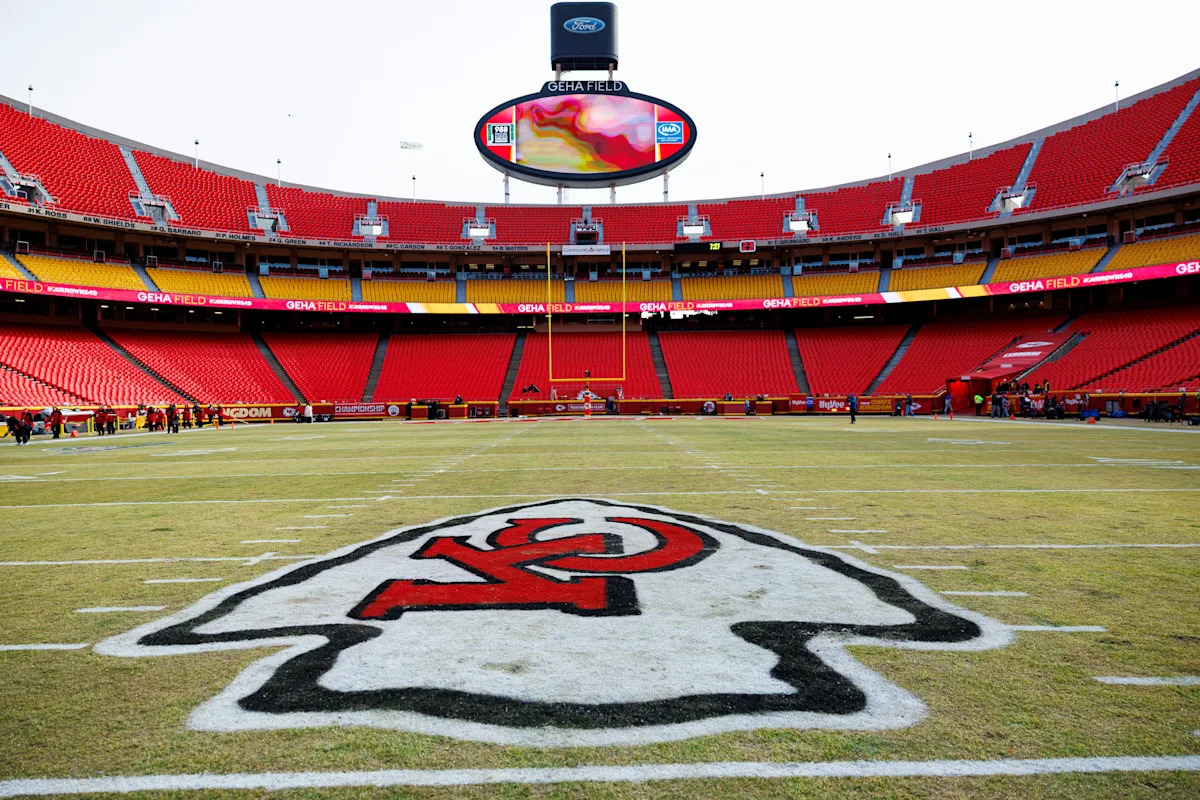
Chiefs announce move from Arrowhead Stadium in Missouri to new domed stadium in Kansas
The Kansas City Chiefs are moving to Kansas.The Chiefs, in conjucntion with Kansas Gov. Laura Kelly and NFL commissioner Roger Goodell, announced in a statement from owner and chairman Clark Hunt on Monday that the team will moved to a domed stadium in Kansas City, Kansas. The announcement came after a meeting of the Kansas Legislative Coordinating Council to discuss the Chiefs’ stadium plans.AdvertisementAdvertisementAdvertisementThe new stadium is planned to be completed in time for the 2031 NFL season."Today we are excited to take another momentous step for the future of the franchise," Hunt's announcement reads. "We have entered into an agreement with the State of Kansas to host Chiefs football beginning with the 2031 NFL season."In the years ahead, we look forward to designing and building a state-of-the-art domed stadium and mixed-use district in Wyandotte County, and a best-in-class training […]
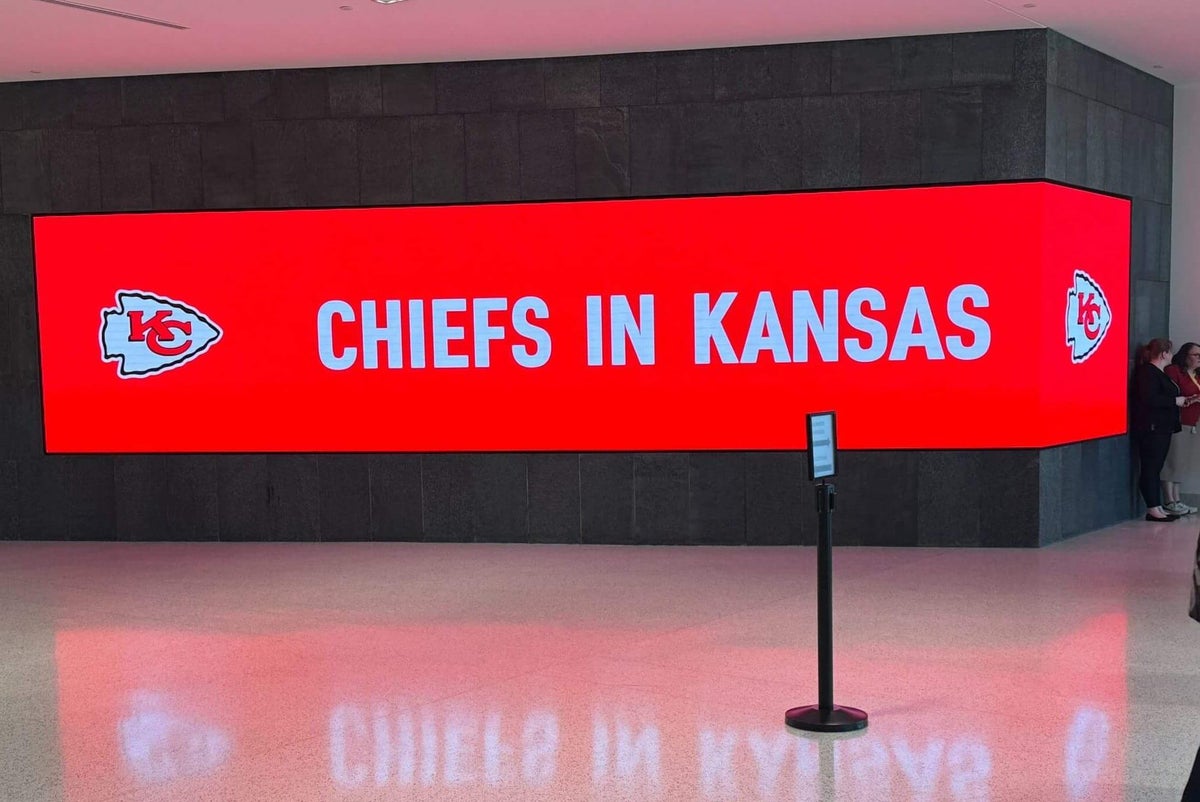
Chiefs announce plans to move to Kansas and build domed stadium
TOPEKA, Kan. — The Kansas City Chiefs will be moving from Missouri to a domed stadium in Kansas in 2031, Gov. Laura Kelly confirmed in an announcement Monday at the Docking State Office Building across from the State Capitol.It completes a lengthy process in which the Chiefs focused on choosing between two specific sites: moving to a state-of-the-art domed stadium in Kansas or renovating Arrowhead Stadium in Missouri. The new stadium was previously projected to cost $3 billion, while a renovated Arrowhead Stadium would’ve been the cheaper option at roughly $1 billion.AdvertisementLieutenant Gov. David Toland called it “the largest economic win in Kansas history,” adding that “this win will also cement Kansas as a global destination for sports and entertainment.“The Chiefs are a part of who we are as Kansans, and now, they’ll be such an important part of our […]
2025 Big Bets Report: 6-Figure, 15-Leg Parlay Alive; CFP Bettor Loses $1.25 Milly
There were bunches of big bets and interesting player-prop parlays between Thursday and Sunday, in NFL Week 16 odds and College Football Playoff odds.But arguably the most intriguing play is one that remains alive heading to Monday night.Picking any NFL game against the spread is often no easy task. Throwing three or four teams into a point-spread parlay significantly heightens the degree of difficulty.String together a 15-game spread parlay? Forget about it.Or maybe, think about it, as a DraftKings Sportsbook customer did. That ticket is alive running to tonight’s 49ers-Colts game, with a six-figure payout on the line.More on that pizza-money parlay, along with a million-dollar wager gone awry, and other big bets and fun parlay payouts, as we recap NFL and college football betting this past weekend.This page may contain affiliate links to legal sports betting partners. If you […]
Related
Mets trade Jeff McNeil to Athletics as David Stearns continues to overhaul roster
The New York Mets have sent second baseman Jeff McNeil to the Athletics in a holiday week trade, the team announced Monday. The A's will also receive nearly $6 million in cash considerations to help cover McNeil's salary, and the Mets will pay for McNeil's buyout if the A's elect against exercising his club option for next season. The Mets, in turn, will receive a young pitching prospect, right-hander Yordan Rodriguez.McNeil should slot in at the keystone for the A's, who were known to be investigating potential second-base upgrades this offseason. Over the past three years, he's hit .253/.326/.389 (101 OPS+) with per-season averages of 11 home runs and 2 Wins Above Replacement. For comparison, the Athletics' collection of second basemen hit .199/.267/.283 with 11 home runs. (That group was led by Luis Urías and Zack Gelof.)McNeil, 33, is entering the final guaranteed season of […]
Mets Trade 2-Time All-Star Jeff McNeil and Cash to Athletics
The Mets had more players than spaces for them after trading for Marcus Semien and signing free agent Jorge Polanco, but they have now cleared some of that up in a deal with the Athletics. New York is sending infielder/outfielder Jeff McNeil and $5.75 million to Sacramento, in exchange for right-handed pitcher Yordan Rodriguez, per ESPN.McNeil is a two-time All-Star who won the National League batting title in 2022, thanks to a .326/.382/.454 season with nearly six wins above replacement. While he has never reached exactly those heights again, he has proven valuable as a player the Mets could reliably slot in at second base, the corner outfield spots, third base and even center or first base when necessary. McNeil has batted .253/.326/.389 combined since 2023, but produced his best work since 2022 this past summer, when he posted a […]
Borgata Promo Code FOXBORGATA: Get $100 in Bonus Bets
This page may contain affiliate links to legal sports betting partners. If you sign up or place a wager, FOX Sports may be compensated. Read more about Sports Betting on FOX Sports.The Borgata Sports promo code FOXBORGATA gives new users $100 in Bonus Bets after placing their first $20 pregame moneyline wager, regardless of whether that bet wins or loses. This straightforward Bet & Get offer is designed for bettors who want guaranteed bonus value without needing a winning first wager.Borgata Sports is the online sportsbook extension of the iconic Borgata casino brand and operates on the same underlying betting platform as BetMGM, delivering a familiar experience with deep markets, competitive odds, and a reliable mobile app for New Jersey bettors.Current Borgata Bonus Details: Bet $20, Get $100 with Promo Code FOXSPORTSNew users who deposit and place a $20+ pregame […]
Chiefs announce move from Arrowhead Stadium in Missouri to new domed stadium in Kansas
The Kansas City Chiefs are moving to Kansas.The Chiefs, in conjucntion with Kansas Gov. Laura Kelly and NFL commissioner Roger Goodell, announced in a statement from owner and chairman Clark Hunt on Monday that the team will moved to a domed stadium in Kansas City, Kansas. The announcement came after a meeting of the Kansas Legislative Coordinating Council to discuss the Chiefs’ stadium plans.AdvertisementAdvertisementAdvertisementThe new stadium is planned to be completed in time for the 2031 NFL season."Today we are excited to take another momentous step for the future of the franchise," Hunt's announcement reads. "We have entered into an agreement with the State of Kansas to host Chiefs football beginning with the 2031 NFL season."In the years ahead, we look forward to designing and building a state-of-the-art domed stadium and mixed-use district in Wyandotte County, and a best-in-class training […]
Chiefs announce plans to move to Kansas and build domed stadium
TOPEKA, Kan. — The Kansas City Chiefs will be moving from Missouri to a domed stadium in Kansas in 2031, Gov. Laura Kelly confirmed in an announcement Monday at the Docking State Office Building across from the State Capitol.It completes a lengthy process in which the Chiefs focused on choosing between two specific sites: moving to a state-of-the-art domed stadium in Kansas or renovating Arrowhead Stadium in Missouri. The new stadium was previously projected to cost $3 billion, while a renovated Arrowhead Stadium would’ve been the cheaper option at roughly $1 billion.AdvertisementLieutenant Gov. David Toland called it “the largest economic win in Kansas history,” adding that “this win will also cement Kansas as a global destination for sports and entertainment.“The Chiefs are a part of who we are as Kansans, and now, they’ll be such an important part of our […]
2025 Big Bets Report: 6-Figure, 15-Leg Parlay Alive; CFP Bettor Loses $1.25 Milly
There were bunches of big bets and interesting player-prop parlays between Thursday and Sunday, in NFL Week 16 odds and College Football Playoff odds.But arguably the most intriguing play is one that remains alive heading to Monday night.Picking any NFL game against the spread is often no easy task. Throwing three or four teams into a point-spread parlay significantly heightens the degree of difficulty.String together a 15-game spread parlay? Forget about it.Or maybe, think about it, as a DraftKings Sportsbook customer did. That ticket is alive running to tonight’s 49ers-Colts game, with a six-figure payout on the line.More on that pizza-money parlay, along with a million-dollar wager gone awry, and other big bets and fun parlay payouts, as we recap NFL and college football betting this past weekend.This page may contain affiliate links to legal sports betting partners. If you […]
Be the first to leave a comment